


Table of Contents
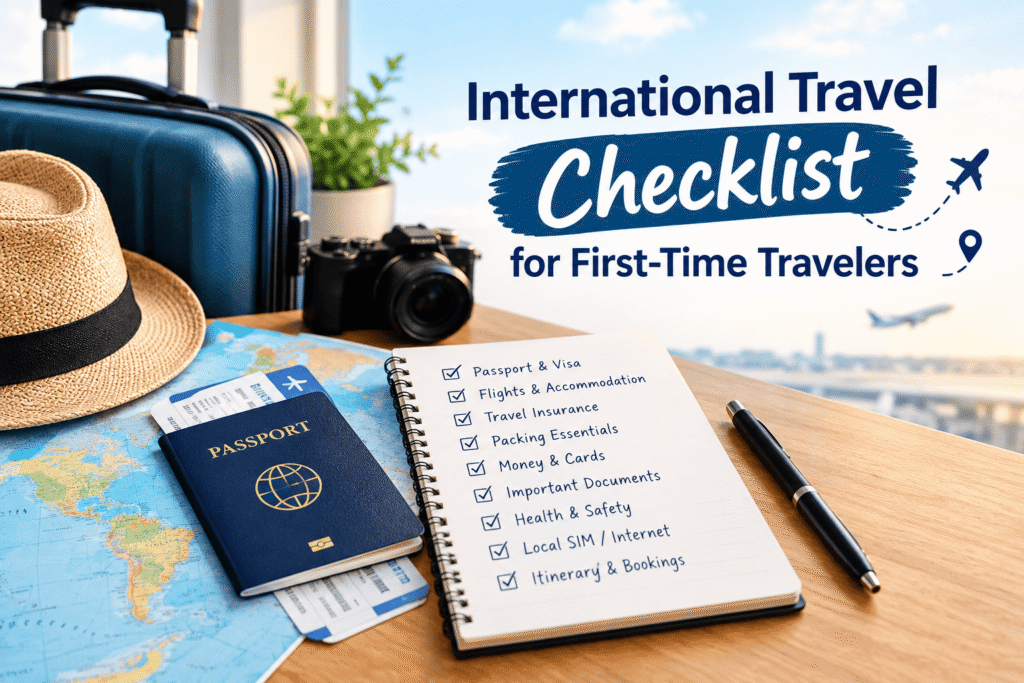
Your first trip abroad can be exciting, but the planning can feel overwhelming: passports, visas, flights, accommodation, money, health precautions, luggage, and emergency plans. This international travel checklist for first-time travelers turns those tasks into a clear sequence so you can prepare step by step rather than rush at the last minute.
Requirements depend on your nationality, destination, purpose, and route. Treat this as a practical planning guide and confirm official rules before booking and again before departure.
A smooth first international trip starts before you reach the airport: confirm your documents, understand your destination, and keep a backup plan for the things you cannot control.
Quick International Travel Checklist
- Check passport validity and blank-page requirements.
- Confirm visa, transit visa, and electronic travel authorization rules.
- Book flights and accommodation with clear cancellation terms.
- Review health advice, medication rules, and travel insurance.
- Plan airport transfers, local transport, and payment options.
- Save digital and printed copies of important documents.
- Pack for the weather, activities, and airline baggage rules.
- Share your itinerary and emergency contacts with someone you trust.
1. Check Your Passport First
Review your passport expiry date as soon as you begin researching destinations. Some countries require a passport to remain valid for a specific period after arrival or planned departure; others have different rules. Do not assume a passport valid on departure day automatically meets the destination’s requirements.
Check whether you have enough blank pages for stamps or visas. If you need to renew your passport, allow time for the process before booking non-refundable travel. Ensure the name on your ticket matches your passport, including spelling and name order, and contact the airline promptly if you find an error.
Keep the original passport secure but accessible when required. Store a digital copy in a secure account and a paper copy separately from the original. Copies do not replace the passport, but they can help you retrieve details if it is lost.
2. Confirm Visa and Entry Requirements
Visa rules depend on your nationality, destination, purpose of travel, length of stay, and sometimes your transit route. Check whether you need a visitor visa, electronic travel authorization, arrival form, proof of onward travel, accommodation details, or evidence that you can cover expenses. If you change planes in another country, check transit visa rules even if you plan to remain at the airport.
Use official government immigration or embassy websites for final decisions. The IATA Travel Centre is a useful starting point for passport, visa, and health requirements, but confirm details with the destination authority. Processing times and document requirements can change, so apply early and keep application and approval records.
If your itinerary includes several countries, check each country’s entry and exit conditions separately. Confirm visa dates, number of entries, and permitted stay. Do not rely only on social media posts or old travel blogs for immigration rules.
3. Research Your Destination and Local Rules
Learn about the weather, public holidays, local transport, common scams, emergency numbers, local laws, cultural expectations, and areas where visitors should take extra care. Conditions can vary by region, so read advice for the specific cities on your itinerary.
Check official advice from your own government and the destination’s relevant authorities. The UK government publishes country-specific foreign travel advice, while the U.S. Department of State has an international travel planning guide. These are examples; travelers of other nationalities should also check their own government’s guidance.
Learn a few useful local phrases, download offline maps, and save your accommodation address in the local language when possible. Check whether your phone works abroad and whether you need roaming, a local SIM, or an eSIM.
4. Organize Flights and Accommodation
Compare flights by total cost, not just the headline fare. Check baggage allowances, seat fees, airport locations, connection times, and change or cancellation conditions. A low fare can become expensive if it excludes checked baggage or requires a costly transfer between airports. For connections, check whether luggage is checked through to your final destination.
For accommodation, review the exact address, check-in hours, cancellation policy, taxes, fees, and recent reviews. Confirm how you will get there from the airport, especially if you arrive late. A cheaper room may not be a bargain if it adds substantial daily transport costs.
Save booking confirmations offline. Keep the property’s phone number and address somewhere separate from your email. If you will arrive after standard check-in, contact the property in advance and confirm how to access the room.
5. Prepare a Realistic Budget and Payment Plan
Include flights, accommodation, local transport, meals, attractions, insurance, mobile data, tips where customary, and emergency expenses. Add a buffer for delays or an unexpected overnight stay. Costs vary by destination and season, so do not treat another traveler’s budget as a guaranteed price.
Check accepted payment methods. Review foreign transaction and ATM fees, and learn how to contact your bank if a card is blocked. Carry a backup payment method and a modest amount of local cash, but avoid keeping all your cash and cards in one place.
When paying by card, check the amount and currency on the terminal. Paying in the local currency may help you avoid a merchant’s potentially costly conversion, although your bank may still charge a fee. Keep receipts for larger purchases and know how to report a lost card.
6. Review Health Needs and Travel Insurance
Review official health advice for each country on your route. Depending on the destination, you may need vaccinations, preventive medicine, or advice about food, water, insects, altitude, or extreme temperatures. The U.S. Centers for Disease Control and Prevention offers destination-specific information through its Travelers’ Health resource; travelers should also consult their own health authority or a qualified clinician.
If you take prescription medication, pack enough for your trip and a reasonable delay buffer where permitted. Keep medicine in labeled packaging when practical, carry a prescription copy, and check whether it is legal to bring into destination and transit countries. Rules for controlled medicines can differ. Keep essential medication in your carry-on.
Read travel insurance terms carefully. Check whether the policy covers emergency medical care, evacuation, trip cancellation or interruption, baggage loss, and planned activities. Pay attention to exclusions, excesses, coverage limits, and requirements for declaring pre-existing conditions. Choose coverage that fits your itinerary.
Preparation is not about expecting problems; it is about making sure one delay, lost bag, or missing document does not derail the whole journey.
7. Pack Smart for Your Route and Airline
Start with your airline’s baggage rules, then pack for the weather and activities. A practical packing list includes:
- Passport, visa or authorization, tickets, and booking confirmations.
- Payment cards, some local cash, and emergency contact details.
- Phone, charging cable, power bank, and suitable plug adapter.
- Prescription medicines and personal health essentials.
- Comfortable shoes, weather-appropriate layers, and activity-specific clothing.
- Toiletries that meet airline cabin-baggage rules.
- Glasses or contact lenses and other personal essentials.
Check restrictions on liquids, batteries, sharp objects, and other cabin items. Power banks and spare lithium batteries often have specific carriage rules, so confirm current airline instructions. Keep valuables, documents, essential medication, and ideally one change of clothes in your cabin bag. Never pack prohibited items.
Leave room for things you may buy. A lighter bag is easier to manage on stairs, crowded trains, and public transport. Choose clothing that can be combined in different ways rather than packing a separate outfit for every possible situation.
8. Plan Airport Transfers and Staying Connected
Research how you will get from the airport to your accommodation. Compare official trains, buses, shuttles, licensed taxis, or reputable ride-hailing services. Confirm where services depart and how you will pay. If you arrive late, plan your route before boarding.
Download offline maps, boarding passes, hotel details, and important documents. Check that your phone is unlocked if you plan to use a local SIM or eSIM. Save key numbers, including your accommodation, insurer, bank, emergency contact, and relevant embassy or consulate.
Use public Wi-Fi carefully, especially when accessing sensitive accounts. Prefer trusted networks, lock your device, and use multi-factor authentication. Avoid sharing your full itinerary publicly while away; consider posting location updates after you leave.
9. Make an Emergency Backup Plan
Share your itinerary with a trusted person and agree on how you will check in. Keep copies of your passport, visa, insurance policy, flight details, and accommodation information in more than one secure place. Store emergency contacts separately in case your phone is lost or discharged.
Know the local emergency number and where to find your country’s embassy or consulate. Understand what your insurer requires before making a claim. If your passport is lost or stolen, follow local reporting procedures where appropriate and your country’s official consular guidance for replacement documents.
For everyday safety, keep valuables discreet, stay aware of your surroundings, and use licensed transport. Be cautious if someone pressures you to hand over your passport, pay an unexpected fee, or follow them somewhere unfamiliar. Move to a public place and contact a trusted person or local authorities if you feel unsafe.
10. The Day-Before-Departure Checklist
Check your flight status and terminal, review baggage limits, and confirm your airport transport. Keep your passport and entry documents in your personal bag—not in luggage you will check. Charge your phone and power bank according to airline rules, download last-minute documents, and set aside travel clothes.
Reconfirm accommodation check-in and check the weather forecast. Weigh your luggage if possible and remove prohibited items. Allow enough time for check-in, security, and immigration; follow your airline’s airport-arrival guidance because requirements vary by airport and route.
Finally, eat, hydrate, and get some rest. You do not need to memorize every detail. Keep the important information organized so you can find it quickly.
A Checklist You Can Save
- Passport valid under destination rules.
- Visa, transit requirements, and entry forms confirmed.
- Flight and accommodation details saved offline.
- Travel insurance policy accessible.
- Health advice and medicine restrictions checked.
- Budget, cards, backup payment, and local cash prepared.
- Baggage rules and packing list checked.
- Airport transfer and mobile connectivity arranged.
- Digital and paper document copies stored separately.
- Emergency contacts and itinerary shared with someone trusted.
Frequently Asked Questions
What documents do I need for international travel?
Most travelers need a valid passport and may need a visa or electronic authorization. Depending on the destination, you may also need onward travel proof, accommodation details, evidence of funds, health documents, or transit permission. Confirm requirements for your nationality and itinerary through official sources.
How early should I prepare for my first trip abroad?
Start as soon as you choose a destination, especially if you need a passport renewal, visa, or vaccinations. Some applications take weeks or longer. Finish major bookings and document checks early, then review requirements again shortly before departure.
Should I print my travel documents?
Yes. Printed copies can help if your phone is lost, discharged, or unable to connect. Keep secure digital copies too. Copies support recovery but do not replace originals where officials require them.
Is travel insurance necessary for a short international trip?
It can be valuable because medical treatment, evacuation, or cancellations can be expensive. Compare exclusions and limits, and check whether existing coverage applies abroad. The right decision depends on destination, activities, and personal circumstances.
What should I keep in my carry-on bag?
Keep your passport and required documents, payment methods, phone and charger, essential medicines, valuables, and anything you would need if checked luggage is delayed. Follow airline rules for liquids, batteries, and restricted items.
Final Thoughts
Your first international trip becomes easier when you break preparation into manageable steps. Start with passport and visa requirements, research your destination, organize bookings and money, check health and insurance needs, and pack according to airline rules. Keep copies of important information and make a simple emergency plan.
Use this international travel checklist for first-time travelers as a starting point, then adapt it to your nationality, destination, season, and itinerary. Most importantly, verify changing entry requirements through official sources close to departure. With the essentials covered, you can spend less time worrying about logistics and more time enjoying the experience.
For more practical travel planning, read DailyScriptor’s guides on how to plan a budget trip and planning a 7-day Europe trip on a budget.