
Table of Contents
The ocean may look calm from the surface, but underneath it, a major change is taking place. Earth’s oceans are getting warmer as they absorb a large amount of the extra heat trapped by greenhouse gases in the atmosphere.
But why is the ocean getting warmer? Is it only because of climate change, or are there other factors involved? What happens to marine life when the water becomes warmer? And can ocean warming affect weather, sea levels, and the future of our planet?
These questions are becoming increasingly important because the ocean is one of Earth’s most important climate systems. It stores heat, moves energy around the planet, supports marine ecosystems, and provides food and livelihoods for billions of people.
Understanding ocean warming does not require advanced knowledge of climate science. In simple terms, the ocean is absorbing more heat than it did in the past, largely because human activities have increased the concentration of heat-trapping greenhouse gases in the atmosphere.
In this guide, we will explore the main causes of rising ocean temperatures, how scientists measure ocean heat, what warmer oceans mean for marine life and weather data analysis and what could happen if the trend continues.
What Is Ocean Warming?
Ocean warming means that the temperature and total heat content of Earth’s oceans are increasing over time.
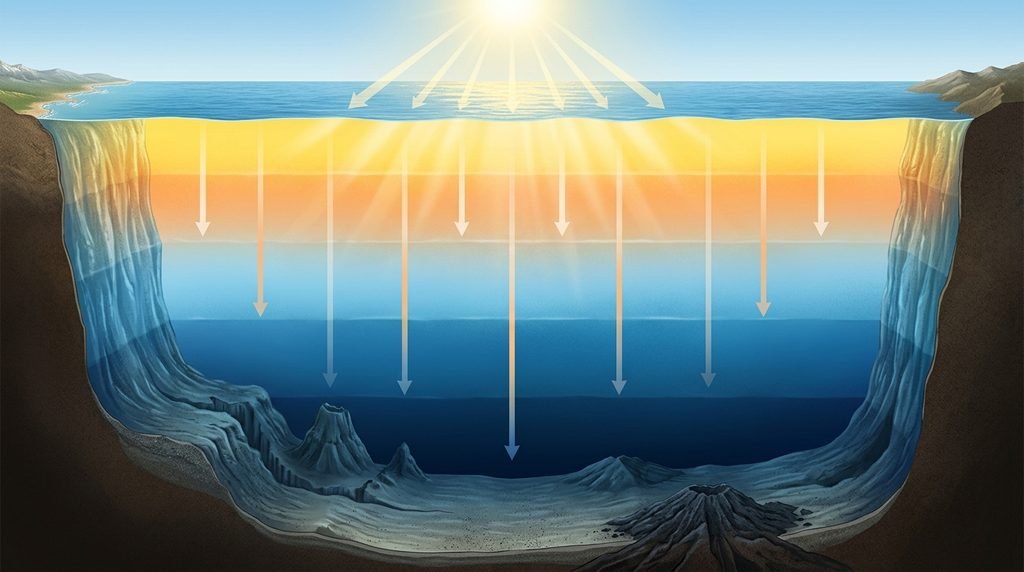
It is important to understand that scientists do not look only at the temperature of the water at the surface. They also study ocean heat content which measures how much heat is stored throughout the ocean.
The ocean is enormous and extends thousands of meters below the surface. Because of this, measuring only the surface temperature does not tell the complete story.
The upper ocean generally warms faster than the deep ocean, but heat can gradually move downward through ocean mixing and circulation.
This makes the ocean one of the largest reservoirs of heat in the Earth’s climate system.
According to NOAA, the ocean has absorbed around 90% of the excess heat associated with human-caused global warming since the 1970s. This enormous heat-storage capacity helps slow the warming of the atmosphere, but it also creates major changes within the ocean itself. (NOAA)
Why Is the Ocean Getting Warmer?
So, why is the ocean getting warmer?
The main reason is the increase in greenhouse gases caused by human activities.
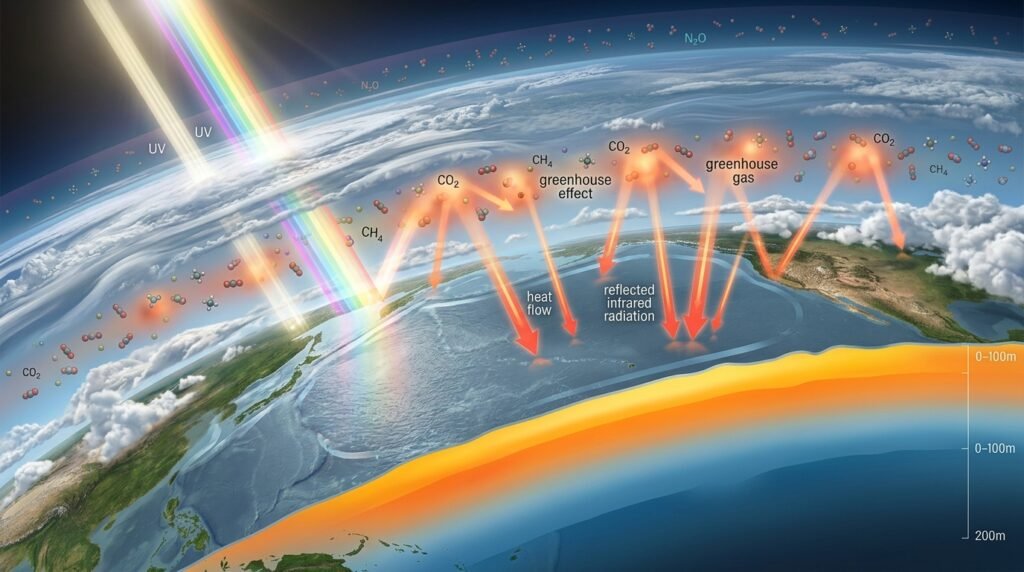
When people burn coal, oil, and natural gas, or clear forests and carry out other activities that release greenhouse gases, gases such as carbon dioxide and methane accumulate in the atmosphere.
These gases trap heat.
The Earth’s climate system receives energy from the Sun. Some of that energy eventually leaves the planet as heat. Greenhouse gases make it harder for some of this heat to escape into space.
The result is a warmer planet.
The ocean absorbs a large portion of this additional heat.
This is why ocean warming is closely connected to global warming and climate change.
Greenhouse Gases
Carbon dioxide is one of the most important greenhouse gases produced by human activities.
When atmospheric carbon dioxide increases, more heat remains within the Earth’s climate system.
The ocean then takes up much of that additional energy.
This does not mean the ocean is simply becoming warm like a swimming pool.
The process occurs across a massive and complex system involving currents, winds, circulation, evaporation, and interactions between the atmosphere and ocean.
Heat From the Atmosphere
The atmosphere and ocean constantly exchange heat.
When the atmosphere becomes warmer, the ocean surface can absorb additional energy.
Wind and waves can then help mix that heat into deeper layers.
This is one reason scientists study both surface temperature and the heat stored below the surface.
What Causes Ocean Warming?
There is one major driver behind the long-term rise in global ocean heat: human-caused global warming.
However, natural processes can influence ocean temperatures in particular regions and during particular years.
The main factors include:
1. Human-Caused Global Warming
The increase in greenhouse gases is the dominant long-term driver.
More greenhouse gases mean more heat is retained within the Earth’s climate system.
A large portion of that heat eventually enters the ocean.
2. Ocean Currents
Ocean currents move warm and cold water around the planet.
A current can transport warm water toward a colder region or bring cooler water toward warmer areas.
Changes in ocean circulation can therefore affect regional ocean temperatures.
3. El Niño and La Niña
Natural climate patterns can cause temporary changes in ocean temperatures.
During an El Niño event, unusually warm water develops across parts of the tropical Pacific.
This can influence global weather patterns.
However, these natural cycles are different from the long-term warming trend caused by increasing greenhouse gases.
4. Marine Heatwaves
A marine heatwave occurs when ocean temperatures remain unusually high in a particular area for an extended period.
Marine heatwaves can affect coral reefs, fish, plankton, and other marine organisms.
They can also influence weather and ocean ecosystems.
Why Does the Ocean Absorb So Much Heat?
This is one of the most important questions when trying to understand why is the ocean getting warmer.
Water has a high heat capacity.
In simple terms, it takes a lot of energy to raise the temperature of water.
The ocean also covers around 71% of Earth’s surface.
That gives it a huge ability to absorb and store heat.
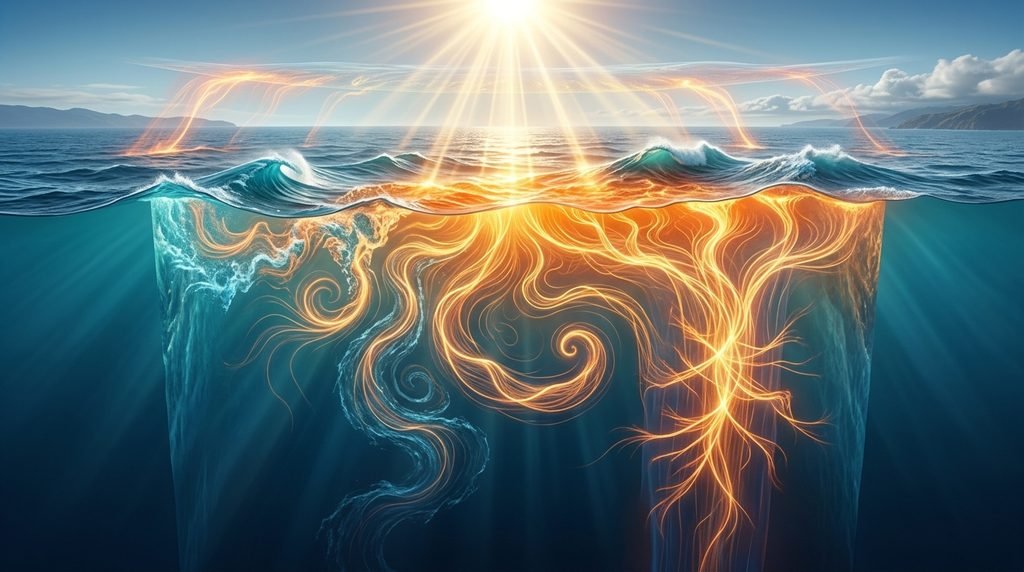
The ocean does not absorb heat only at the surface.
Waves, winds, and ocean currents move heat through different layers.
Some of the heat remains near the surface, while some is transported deeper into the ocean.
This enormous heat-storage ability has protected the atmosphere from becoming even warmer, but it has also caused the ocean to accumulate an enormous amount of energy.
How Do Scientists Measure Ocean Temperature?
Scientists cannot understand ocean warming by measuring one beach or one section of the ocean.
They need observations from around the world.
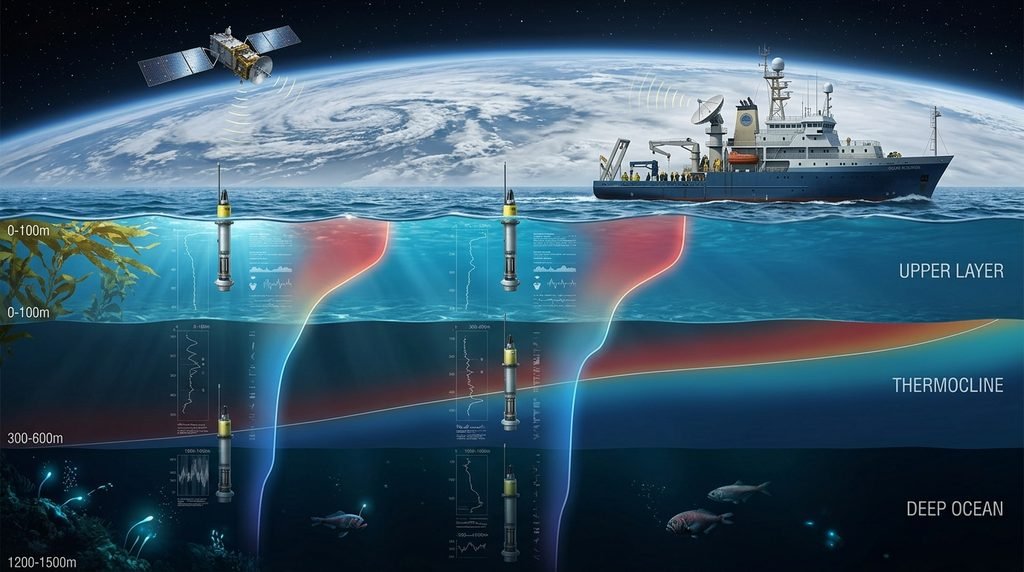
Scientists use several technologies to monitor ocean temperature.
Satellites
Satellites can measure sea surface temperature over enormous areas.
This gives scientists a global picture of how surface waters are changing.
Argo Floats
Argo is a global network of autonomous floats that travel through the ocean and collect measurements.
These instruments can move down through the water column and return information about temperature and salinity.
This helps researchers understand changes below the surface.
Research Ships
Scientific research vessels also collect measurements.
Scientists can use specialized instruments to examine temperature, salinity, chemistry, currents, and marine ecosystems.
By combining measurements from satellites, floats, ships, and other instruments, researchers can build a much clearer picture of global ocean warming.
NASA’s Earth-observing systems also provide extensive information about ocean temperatures and related climate changes. (NASA)
How Does Ocean Warming Affect Marine Life?
One of the biggest consequences of warmer oceans is the effect on marine ecosystems.
Marine organisms often live within specific temperature ranges.
When the water becomes unusually warm, some species can struggle to survive or may move toward cooler areas.
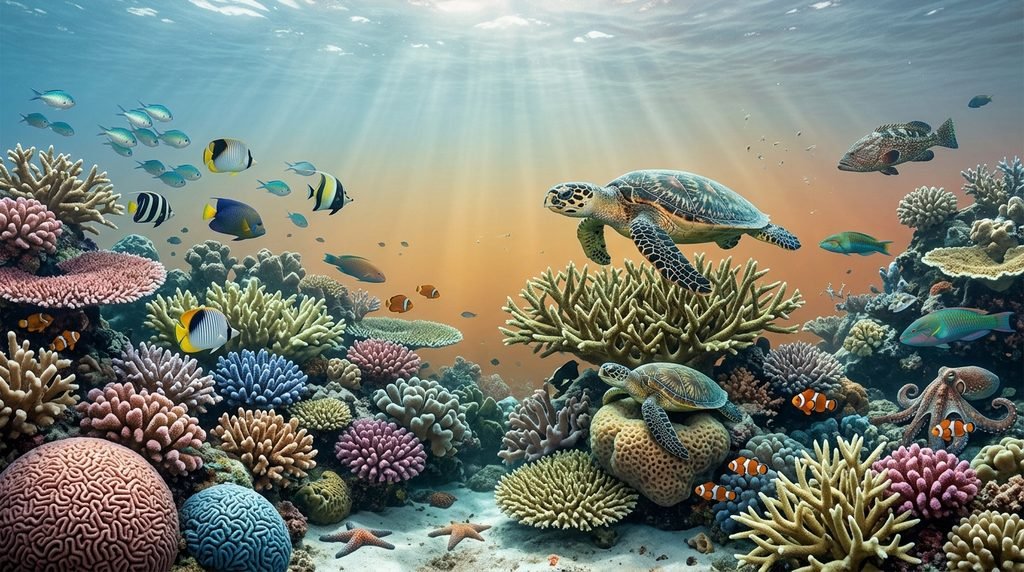
Coral Reefs
Coral reefs are particularly sensitive to temperature changes.
When corals experience prolonged heat stress, they can expel the microscopic algae that live within their tissues.
This process is known as coral bleaching.
Bleached coral is not necessarily immediately dead, but prolonged or severe bleaching can make corals more vulnerable to disease and death.
Because coral reefs provide habitats for many marine species, widespread coral loss can affect entire ecosystems.
Fish and Other Marine Animals
Fish may move toward cooler waters as ocean temperatures change.
This can alter where species are found.
For fishing communities, changes in the distribution of fish can affect catches, local economies, and food supplies.
Plankton
Plankton are tiny organisms that form the foundation of many marine food webs.
Changes in temperature can affect their growth, reproduction, and distribution.
Because many larger animals depend on plankton, changes at this small scale can spread through the wider ecosystem.
How Does Ocean Warming Affect Weather?
The ocean and atmosphere are strongly connected.
The ocean stores enormous amounts of heat, and that heat can influence weather systems.
Warmer ocean water can provide more energy and moisture to the atmosphere.
This can influence storms, rainfall, and other weather patterns.
Hurricanes and Tropical Cyclones
DailyScriptor Tropical cyclones generally require warm ocean water to develop and strengthen.
Warmer ocean conditions can provide additional energy to storms under suitable atmospheric conditions.
However, storm behavior depends on many factors, including wind shear, atmospheric moisture, and large-scale weather patterns.
This means ocean warming does not automatically make every storm stronger.
Instead, it can change the conditions in which some storms develop.
Heavy Rainfall
Warmer air can hold more moisture.
When warm ocean water contributes heat and moisture to the atmosphere, it can influence rainfall patterns.
This is one reason scientists study the relationship between ocean temperatures and extreme precipitation.
How Does Ocean Warming Cause Sea Level Rise?
Ocean warming is also connected to sea level rise.
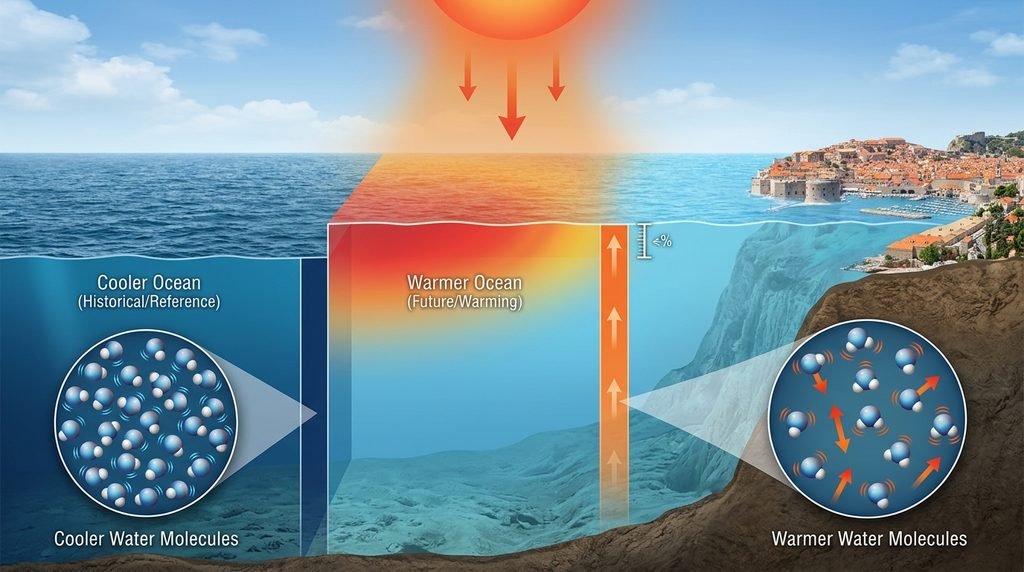
One reason is a process called thermal expansion.
When water becomes warmer, it expands.
Imagine filling a container with water and heating it. The water takes up slightly more space.
The same basic physical principle applies to the enormous amount of seawater in the global ocean.
As seawater warms, it expands and contributes to rising sea levels.
Sea level also rises because glaciers and ice sheets lose ice that eventually adds water to the ocean.
NASA explains that ocean warming and melting land ice are major contributors to global sea-level rise. (NASA Sea Level Change)
Image placement: Add a simple illustration showing warmer seawater expanding and contributing to sea-level rise.
What Happens If Oceans Keep Getting Warmer?
If oceans continue warming, the effects could become more widespread.
Potential consequences include:
- More frequent or intense marine heatwaves
- Greater stress on coral reefs
- Changes in fish distribution
- Changes in marine ecosystems
- Continued sea-level rise
- Changes in ocean circulation
- Greater stress on polar ecosystems
- Changes in weather and rainfall patterns
The exact effects will not be identical everywhere.
Some regions may experience much greater changes than others.
For example, a species that can move toward cooler waters may adapt better than a species living in a limited habitat.
This is why scientists study local and regional changes as well as global averages.
How Does Ocean Warming Affect Coral Reefs?
Coral reefs are among the ecosystems most vulnerable to prolonged ocean warming.
Corals live in partnership with tiny algae called zooxanthellae.
These algae provide much of the energy corals need.
When water becomes too warm for too long, corals can become stressed and expel the algae.
The coral then loses much of its color, producing the familiar appearance of coral bleaching.
If temperatures return to normal quickly enough, some corals can recover.
But severe or prolonged heat stress can cause widespread coral mortality.
This matters beyond coral itself.
Healthy reefs provide shelter and feeding grounds for many marine organisms.
They also support coastal communities and economies.
Is the Whole Ocean Getting Warmer?
No.
Ocean warming is not happening at exactly the same rate everywhere.
Some regions warm faster than others.
Ocean currents, winds, depth, geography, seasonal patterns, and natural climate variability all influence local temperatures.
The deep ocean also behaves differently from surface waters.
This is why scientists look at long-term global datasets instead of judging ocean warming from a single location.
A beach can have a cooler summer even while the global ocean continues to accumulate heat.
That may sound confusing, but it is an important distinction:
Weather is local and short-term. Climate is a long-term pattern across much larger areas.
What Are Marine Heatwaves?
Marine heatwaves are periods when ocean temperatures remain unusually high compared with the normal conditions for a particular location and time of year.
They can last days, weeks, or even months.
Marine heatwaves can have serious effects on marine ecosystems.
They may cause:
- Coral bleaching
- Fish migration
- Changes in plankton
- Seagrass stress
- Changes in food webs
- Fisheries impacts
Scientists are paying increasing attention to marine heatwaves because they can produce sudden ecological changes.
A long-term warming ocean can also make unusually warm events more likely or more severe in some regions.
Can Ocean Warming Be Reversed?
This is a complicated question.
The ocean does not respond immediately to changes in atmospheric greenhouse gases.
Because water stores enormous amounts of heat, the climate system has significant inertia.
Reducing greenhouse gas emissions is therefore critical to slowing future warming.
If humanity reduces greenhouse gas emissions substantially, the rate of warming can eventually slow.
However, that does not mean the ocean would quickly return to its previous temperature.
Some changes can take a very long time.
Reducing emissions, protecting marine ecosystems, improving energy efficiency, expanding clean energy, and reducing other sources of greenhouse gas emissions can all contribute to limiting future warming.
Adaptation is also important.
Communities can prepare for changing coastlines, marine ecosystems, fisheries, and extreme weather risks.
Why Ocean Warming Matters to Humans
It can be easy to think of ocean warming as a problem that affects only marine animals.
It does not.
The ocean is closely connected to human society.
Millions of people depend on oceans for:
- Food
- Fishing
- Tourism
- Transportation
- Coastal protection
- Jobs
- Recreation
- Marine resources
Changes in ocean ecosystems can therefore create economic and social consequences.
For example, if fish populations move because of changing water temperatures, fishing communities may need to travel farther or change the species they target.
If coral reefs decline, communities that depend on reef tourism can also face economic losses.
Sea-level rise can create additional challenges for coastal cities and communities.
What Can Be Done About Ocean Warming?
The most important long-term solution is reducing the greenhouse gas emissions that drive global warming.
That means moving toward cleaner energy sources, improving energy efficiency, protecting forests and other carbon-storing ecosystems, and reducing emissions across transportation, industry, agriculture, and other sectors.
Protecting marine ecosystems is also important.
Healthy ecosystems can be more resilient to environmental stress.
Actions such as protecting coral reefs, managing fisheries sustainably, reducing pollution, and protecting coastal habitats can help marine ecosystems cope with changing conditions.
No single action can solve ocean warming.
It requires changes across the global energy and economic system.
The Future of Earth’s Oceans
The future of the ocean will depend heavily on what happens to global greenhouse gas emissions and how quickly societies adapt.
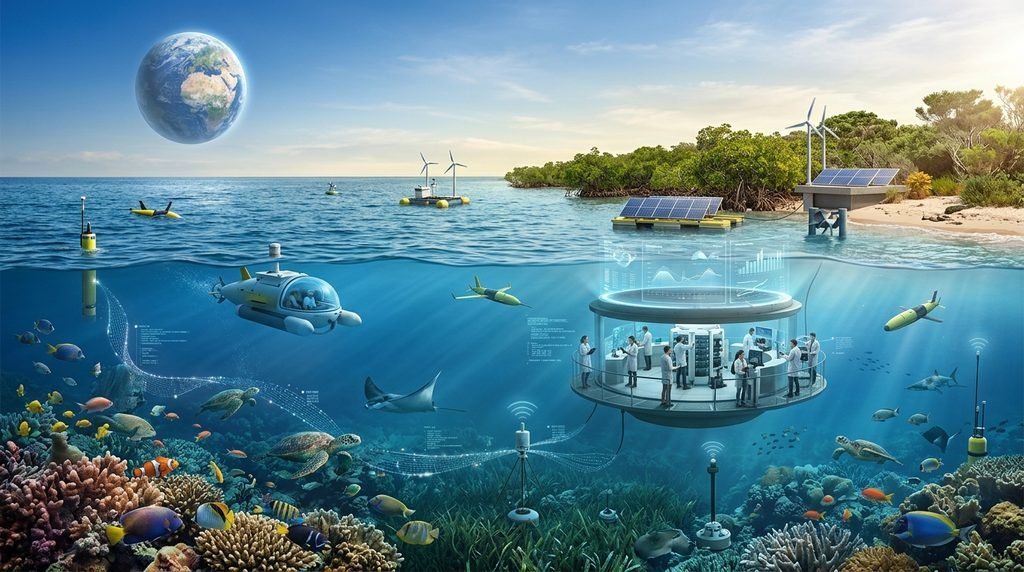
Scientists will continue monitoring ocean heat using satellites, autonomous floats, research vessels, and other technologies.
As measurement systems improve, researchers can better understand how heat moves through the ocean and how marine ecosystems respond.
The ocean will remain a major part of Earth’s climate system.
Even if atmospheric warming slows, the ocean will continue to play an important role because of its enormous size and ability to store heat.
Understanding these changes is therefore essential for scientists, governments, businesses, coastal communities, and ordinary people.
Frequently Asked Questions About Ocean Warming
Why is the ocean getting warmer?
The main reason is human-caused global warming. Increased greenhouse gases trap additional heat in Earth’s climate system, and the ocean absorbs a large portion of that excess heat.
Why are oceans getting warmer?
Oceans are getting warmer primarily because they absorb excess heat associated with rising greenhouse gas concentrations. Natural climate patterns such as El Niño can also cause temporary regional changes.
What causes ocean warming?
The main long-term cause is the increase in greenhouse gases from human activities. Ocean currents and natural climate variability can influence regional and short-term temperature changes.
How does ocean warming affect marine life?
Warmer water can stress marine organisms, change species distributions, contribute to coral bleaching, alter plankton populations, and disrupt marine food webs.
How does ocean warming affect weather?
The ocean exchanges heat and moisture with the atmosphere. Warmer waters can influence storms, rainfall, and other weather patterns, although individual weather events depend on many factors.
How does ocean warming cause sea level rise?
Warm water expands. This process, called thermal expansion, increases the volume of seawater and contributes to sea-level rise.
Why does the ocean absorb so much heat?
Water has a high heat capacity, and the ocean covers most of Earth’s surface. Its enormous volume allows it to store a very large amount of heat.
How do scientists measure ocean temperature?
Scientists use satellites, Argo floats, research ships, buoys, and other instruments to measure surface temperature and heat deeper within the ocean.
Can ocean warming be reversed?
Reducing greenhouse gas emissions can slow future warming, but the ocean responds slowly because it stores enormous amounts of heat. Limiting future warming is therefore easier than quickly reversing accumulated ocean heat.
What happens if oceans keep getting warmer?
Continued warming could increase marine heatwaves, stress coral reefs, shift marine species, contribute to sea-level rise, and affect weather and marine ecosystems.
Conclusion
So, why is the ocean getting warmer?
The main answer is that Earth’s climate system is retaining more heat because human activities have increased greenhouse gas concentrations. The ocean absorbs a large share of this excess energy, causing its heat content and temperatures to rise over time.
Ocean warming is much more than a change in water temperature.
It can affect coral reefs, fish, plankton, sea levels, storms, rainfall, coastal communities, and entire marine ecosystems.
The good news is that scientists have powerful tools to monitor these changes, and societies have ways to reduce future warming.
Understanding ocean warming is the first step toward understanding what is happening to Earth’s climate system—and why the health of the ocean matters to everyone.