
The AI race has entered another major stage. In September 2026, OpenAI introduced GPT-6 Astra, while Anthropic introduced Claude Fable 5.1 just two days earlier.
Both companies are targeting the same rapidly growing market: AI systems that can do more than answer questions. These new models are designed for coding, research, computer use, knowledge work, and complex multi-step tasks.
That makes the question GPT-6 Astra vs Claude Fable 5.1 especially interesting for developers, researchers, businesses, writers, and everyday AI users.
OpenAI describes GPT-6 Astra as its most capable model yet, with improvements across computer use, coding, research, science, and professional work. Anthropic describes Claude Fable 5.1 as its most capable model for coding and knowledge work, with advanced research capabilities.
So which model should you use?
The answer depends on what you want to accomplish.
GPT-6 Astra vs Claude Fable 5.1 at a Glance
| Feature | GPT-6 Astra | Claude Fable 5.1 |
|---|---|---|
| Company | OpenAI | Anthropic |
| Launch | September 3, 2026 | September 1, 2026 |
| Main focus | Reasoning, coding, computer use, research | Coding, knowledge work, research |
| Computer use | Yes | Yes |
| Coding | Advanced | Advanced |
| Research | Advanced | Advanced |
| AI agents | Yes | Yes |
| Long-running tasks | Yes | Yes |
| API access | Yes | Yes |
| Input price | $10 / 1M tokens | $10 / 1M tokens |
| Output price | $50 / 1M tokens | $50 / 1M tokens |
Anthropic lists Claude Fable 5.1 at $10 per million input tokens and $50 per million output tokens. OpenAI’s current GPT-6 Astra API documentation also places the model in this high-end pricing range.
What Is GPT-6 Astra?
GPT-6 Astra is OpenAI’s newest flagship model, launched on September 3, 2026.
Unlike a traditional chatbot that mainly generates an answer, Astra is designed to handle more complete workflows.
OpenAI highlights improvements in coding, research, computer use, and complex multi-step work. Astra can also create documents, spreadsheets, and presentations according to templates and instructions.
This means a user can give the model a broader objective instead of a single question.
For example, instead of asking:
“How do I analyze this data?”
a user could potentially ask an AI agent to analyze the data, identify important findings, create a spreadsheet, prepare a report, and present the results.
That shift from answer generation to task completion is one of the most important developments behind GPT-6 Astra.
OpenAI also says Astra can work with computer environments and perform tasks such as research, software engineering, browser interactions, and professional workflows.
What Is Claude Fable 5.1?
Claude Fable 5.1 is Anthropic’s latest model for advanced coding and knowledge work.
Anthropic introduced Fable 5.1 on September 1, 2026, describing it as its most capable model for coding and knowledge work. The company also highlights research capabilities and long-running professional tasks.
Fable 5.1 is designed for users who need AI to work through complicated projects rather than simply answer individual prompts.
That includes:
- Software development
- Code review
- Research
- Document analysis
- Knowledge work
- Professional writing
- Data analysis
- AI agents
- Long-running projects
Anthropic has also positioned Fable 5.1 for developers who want to build applications that require advanced reasoning and agentic capabilities.
GPT-6 Astra vs Claude Fable 5.1: Reasoning
Reasoning is one of the most important areas when comparing advanced AI models.
GPT-6 Astra is designed to handle complex tasks that require multiple steps. OpenAI emphasizes the model’s ability to adapt when requirements change during a task.
This is useful when a project does not have a perfectly defined path from beginning to end.
For example, a user might ask Astra to research a topic, analyze several sources, identify the most important information, and create a professional report.
The model can then adjust if the user adds another requirement.
Claude Fable 5.1 takes a similar approach.
Anthropic focuses heavily on long-running knowledge work and agentic workflows. The model is designed to work through complicated tasks involving coding, research, documents, and tools.
Which model is better at reasoning?
There is no universal winner.
GPT-6 Astra is particularly interesting for users who want reasoning combined with computer use and end-to-end task completion.
Claude Fable 5.1 is particularly attractive for long-running coding, research, and knowledge-work projects.
The best model will depend on the specific task.
GPT-6 Astra vs Claude Fable 5.1 for Coding
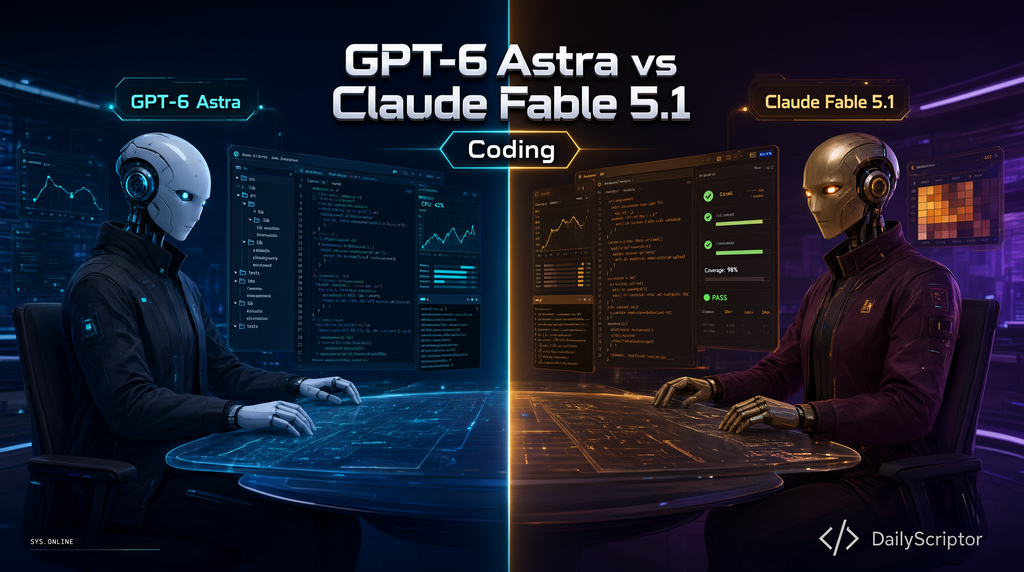
Coding is one of the biggest areas of competition between OpenAI and Anthropic.
GPT-6 Astra is designed for software engineering and computer-based development tasks. OpenAI highlights improvements in codebase understanding, software engineering, computer use, and complex workflows.
This makes it useful for tasks such as:
- Understanding existing projects
- Finding bugs
- Writing code
- Testing applications
- Working with development tools
- Building websites
- Reviewing software
- Troubleshooting technical problems
Claude Fable 5.1 is also heavily focused on coding.
Anthropic describes it as its most capable model for coding and knowledge work.
Claude has become particularly popular among developers because of its ability to work with large projects and coding agents.
Which is better for developers?
If you need an AI that can combine coding, browser interaction, computer use, and broader workflows GPT-6 Astra is a strong option.
If your priority is long-running coding and knowledge-intensive software projects Claude Fable 5.1 is also an excellent choice.
Rather than choosing purely from benchmark scores, developers should test both models against their actual codebase.
GPT-6 Astra vs Claude Fable 5.1 for Research
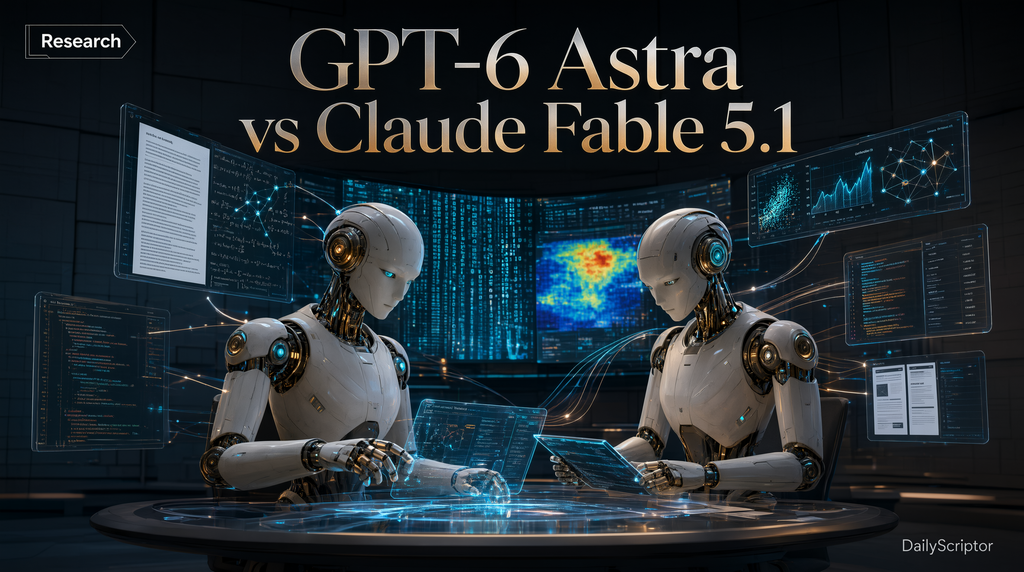
Research is another area where both models are becoming much more capable.
GPT-6 Astra combines reasoning with computer use and research capabilities.
This can be useful when research needs to turn into a finished deliverable.
For example:
- Gather information.
- Analyze the information.
- Compare findings.
- Organize the results.
- Create a report.
- Produce a presentation.
OpenAI specifically highlights research and professional work among Astra’s major capabilities.
Claude Fable 5.1 is also designed for advanced research.
Anthropic says its new models provide research capabilities that offer an early look at how AI can contribute to scientific progress.
For researchers, this makes Claude particularly interesting for complex knowledge work involving documents, analysis, and long-running tasks.
Research winner?
It is too early to declare one universal winner.
For computer-assisted research and finished professional deliverables GPT-6 Astra is highly compelling.
For long-running knowledge work and research-heavy workflows Claude Fable 5.1 is equally interesting.
Computer Use: GPT-6 Astra vs Claude Fable 5.1
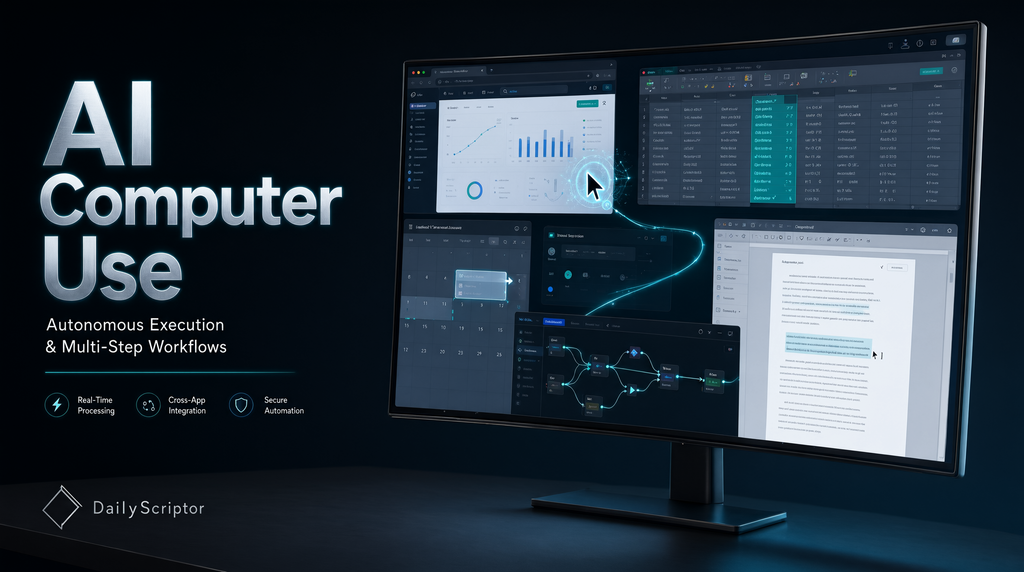
Computer use may be the biggest change in this generation of AI models.
Traditional AI assistants mainly produce text.
Computer-use agents can interact with digital environments and perform actions.
GPT-6 Astra is designed with computer use as one of its major capabilities. OpenAI highlights tasks involving browsers, software engineering, research, and professional applications.
This opens the door to workflows such as:
- Filling forms
- Researching websites
- Managing information
- Testing websites
- Working with software
- Organizing documents
- Completing multi-step computer tasks
Claude Fable 5.1 also targets agentic workflows and advanced tool use.
The broader trend is clear: AI is moving from “tell me how to do it” toward “help me do it.”
This could have a major impact on businesses and software development.
Context and Large Projects
Large context windows are increasingly important for professional AI use.
Developers may need to give an AI model an entire codebase.
Researchers may need to work with hundreds of documents.
Businesses may need to analyze large amounts of internal information.
Both GPT-6 Astra and Claude Fable 5.1 are designed for demanding workloads involving large amounts of context.
However, context-window size alone should not determine which model you choose.
A larger context window does not automatically mean better answers.
The more important questions are:
- Can the model find the relevant information?
- Can it reason over that information?
- Does it maintain consistency?
- Can it complete the task reliably?
- How many corrections does it require?
For most users quality of context handling matters more than the headline context number.
GPT-6 Astra vs Claude Fable 5.1: Pricing
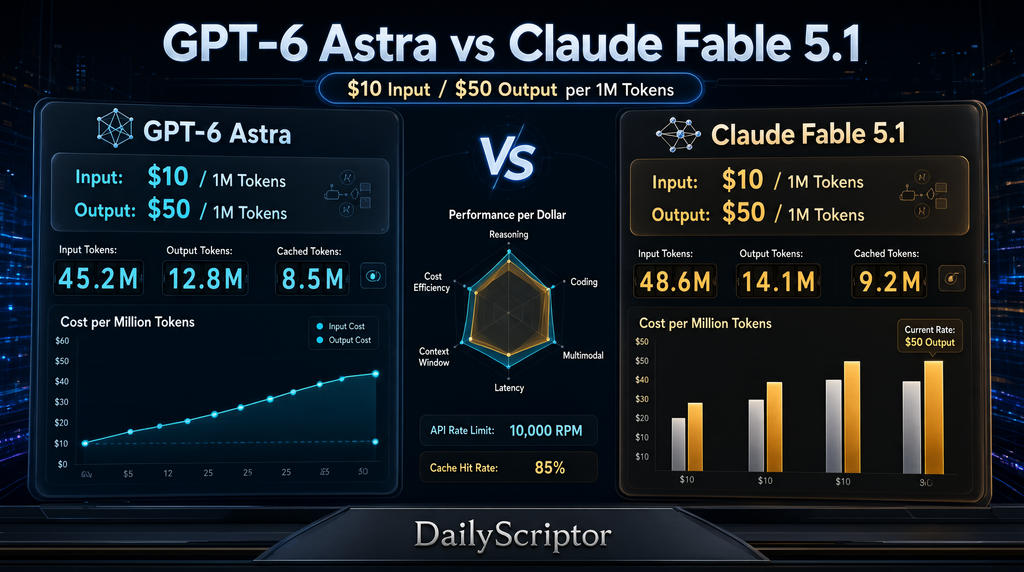
Pricing is particularly important for developers and businesses using AI through APIs.
Claude Fable 5.1 is priced at:
- $10 per million input tokens
- $50 per million output tokens
Anthropic also offers significantly cheaper cached-input pricing, which can reduce the cost of repeated-context workloads.
OpenAI’s GPT-6 Astra is positioned as a high-end model for difficult end-to-end work, with API access available through OpenAI’s platform.
For businesses, the actual cost should not be judged only by the token price.
A model that completes a task correctly on the first attempt may be cheaper than a less reliable model that requires several retries.
So the better question is:
How much does it cost to successfully complete the entire task?
GPT-6 Astra vs Claude Fable 5.1 for Businesses

Businesses are likely to be one of the biggest beneficiaries of these new AI models.
A company could use an advanced AI model for:
- Market research
- Customer support
- Data analysis
- Software development
- Content creation
- Reports
- Presentations
- Internal documentation
- Research
- Workflow automation
GPT-6 Astra is particularly interesting for businesses because OpenAI is emphasizing end-to-end professional work.
The model can create documents, spreadsheets, and presentations while adapting to changing requirements.
Claude Fable 5.1 is similarly focused on professional knowledge work.
Anthropic specifically positions Fable 5.1 for ambitious coding and knowledge-work projects.
For a business, the best choice will depend on existing tools, integrations, security requirements, workflow design, and the type of work being automated.
GPT-6 Astra vs Claude Fable 5.1 for Content Creation
Writers, bloggers, marketers, and publishers can also benefit from both models.
AI can assist with:
- Topic research
- Article outlines
- Editing
- Content planning
- Research summaries
- Headlines
- Social media ideas
- Reports
- Document creation
GPT-6 Astra has an interesting advantage when content creation becomes part of a larger workflow.
For example, the AI could research information, organize the findings, prepare a document, and create a presentation.
Claude Fable 5.1 is also well suited to long-form knowledge work.
For professional writers, the best model may depend on writing style, research needs, editing quality, and how much computer interaction is required.
The important thing is not to publish AI output without human review.
Human expertise, fact checking, originality, and editing remain important.
GPT-6 Astra vs Claude Fable 5.1 for AI Agents

The biggest story behind these models may actually be the growth of AI agents.
An AI chatbot waits for a prompt and returns an answer.
An AI agent can receive a goal and perform multiple actions to reach that goal.
For example:
Goal: Research ten competitors and prepare a comparison report.
An agent could potentially:
- Search for the companies.
- Collect information.
- Organize the data.
- Compare products.
- Identify differences.
- Create a report.
- Prepare a presentation.
GPT-6 Astra is explicitly designed for complex end-to-end work and computer use.
Claude Fable 5.1 is also designed around advanced agentic workflows and long-running tasks.
This means the competition is changing.
The future may not be about which chatbot gives the best answer.
It may be about which AI agent can complete the most useful work reliably.
Safety and Reliability

Greater AI capability also creates greater responsibility.
OpenAI says GPT-6 Astra represents a significant increase in cybersecurity capabilities and has introduced additional safeguards and monitoring around those capabilities.
Anthropic is also applying stronger safeguards to its frontier models.
This matters because an AI system that can operate computers and use tools can potentially have a much greater impact than a model that only generates text.
For businesses, AI safety should therefore be considered alongside:
- Accuracy
- Cost
- Speed
- Privacy
- Permissions
- Monitoring
- Human oversight
The best AI system is not simply the most powerful one.
It is the one that can be used safely and reliably for the intended workflow.
Which Is Better: GPT-6 Astra or Claude Fable 5.1?
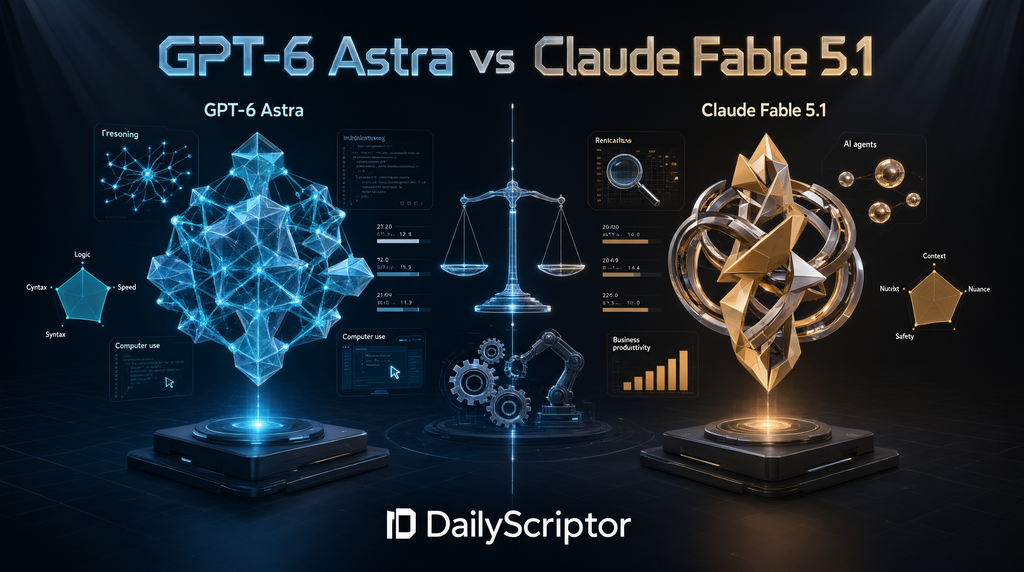
After comparing the major areas, the answer is still not completely straightforward.
GPT-6 Astra may be better for:
- Computer use
- End-to-end workflows
- Complex multi-step tasks
- Research
- Software engineering
- Professional documents
- Spreadsheets
- Presentations
- Broad AI-agent workflows
OpenAI’s positioning of Astra strongly emphasizes these areas.
Claude Fable 5.1 may be better for:
- Long-running coding
- Knowledge work
- Research-heavy projects
- Large professional tasks
- Coding agents
- Document-intensive workflows
- Advanced developer workflows
Anthropic specifically positions Fable 5.1 as its most capable model for coding and knowledge work.
Final Verdict
So, GPT-6 Astra vs Claude Fable 5.1 — which AI model is better?
For now, there is no single model that wins every category.
GPT-6 Astra is a major step toward AI systems that can understand a goal, use computers, reason through multiple steps, and produce finished professional work.
Claude Fable 5.1 takes a similarly ambitious approach, with a particularly strong focus on coding, knowledge work, research, and long-running agentic tasks.
For developers, both models deserve serious testing.
For researchers, both offer powerful new workflows.
For businesses, the choice should depend on which model can complete the company’s actual tasks more reliably and cost-effectively.
The most useful test is therefore not a marketing comparison.
Give both models the same real-world task.
Use the same instructions.
Give them the same data.
Then compare the results.
Look at accuracy, speed, cost, reliability, tool use, and how much human supervision was required.
That is the best way to determine whether GPT-6 Astra or Claude Fable 5.1 is the right AI model for you.
The larger story, however, is bigger than one model winning a comparison.
Both OpenAI and Anthropic are moving AI toward a future where models can reason, use tools, operate computers, write software, conduct research, and complete real work.
And that may be the most important AI development of 2026.
Frequently Asked Questions
Is GPT-6 Astra better than Claude Fable 5.1?
Not in every situation. GPT-6 Astra is particularly focused on computer use and end-to-end workflows, while Claude Fable 5.1 is strongly focused on coding, knowledge work, research, and long-running agentic tasks.
Which is better for coding?
Both are advanced coding models. The better option depends on your codebase, development environment, tools, and whether you need long-running autonomous coding or broader computer-based workflows.
Which is better for research?
Both models are designed for advanced research. GPT-6 Astra emphasizes computer-assisted research and professional deliverables, while Claude Fable 5.1 places strong emphasis on knowledge work and research.
Is Claude Fable 5.1 available now?
Yes. Anthropic says Claude Fable 5.1 is available to Pro, Max, Team, and Enterprise users, as well as developers through supported API platforms.
Is GPT-6 Astra available now?
GPT-6 Astra was introduced on September 3, 2026. OpenAI initially began rolling access out to a limited set of organizations, with broader availability planned.
Which AI model should businesses choose?
Businesses should compare both models using their actual workflows. Cost, accuracy, privacy, integrations, reliability, and human oversight can matter more than benchmark scores.
What is the biggest difference between GPT-6 Astra and Claude Fable 5.1?
GPT-6 Astra places strong emphasis on computer use, complex reasoning, and end-to-end task completion. Claude Fable 5.1 places particularly strong emphasis on coding, knowledge work, research, and long-running agentic workflows.
Conclusion
The GPT-6 Astra vs Claude Fable 5.1 competition shows that AI models are rapidly evolving beyond traditional chatbots.
Both models can assist with coding, research, reasoning, professional work, and AI-agent workflows.
The real winner will ultimately be the model that can solve your specific problem with the best combination of accuracy, reliability, speed, cost, and autonomy. Explore the Latest AI Models:
For users exploring the newest generation of AI, both GPT-6 Astra and Claude Fable 5.1 are models worth watching closely.
How did you find this article?
Your feedback helps us improve.
Thank you for your feedback!
You finished this article!
Great job! Here are 3 more articles you might enjoy.