Table of Contents
Why are technology companies investing billions of dollars in AI data centers in 2026 The answer goes beyond the popularity of artificial intelligence. Companies such as Microsoft, Google, Amazon, and Meta need enormous computing capacity to train AI models, operate AI assistants, process business workloads, and serve millions of users. Building that capacity requires specialized chips, powerful servers, high-speed networking, reliable electricity, cooling systems, and large facilities.
The scale of this investment is becoming difficult to ignore. J.P. Morgan estimated that capital expenditure by major cloud providers, often called hyperscalers, could reach approximately $697 billion in 2026. That figure represents an estimate for a group of large infrastructure investors, not spending by every technology company or data center operator worldwide.
This raises several important questions. Why does AI require so much infrastructure? Which companies are spending the most? How much electricity do AI data centers need? And could the enormous cost of building them become a financial risk?
Understanding these questions helps explain why AI infrastructure has become one of the most important technology and business stories of 2026.
AI is not just a software race. The companies that want to lead it also need the computing power, electricity, networking, and physical infrastructure required to run their systems at scale.
Why Are Tech Companies Investing Billions in AI Data Centers?
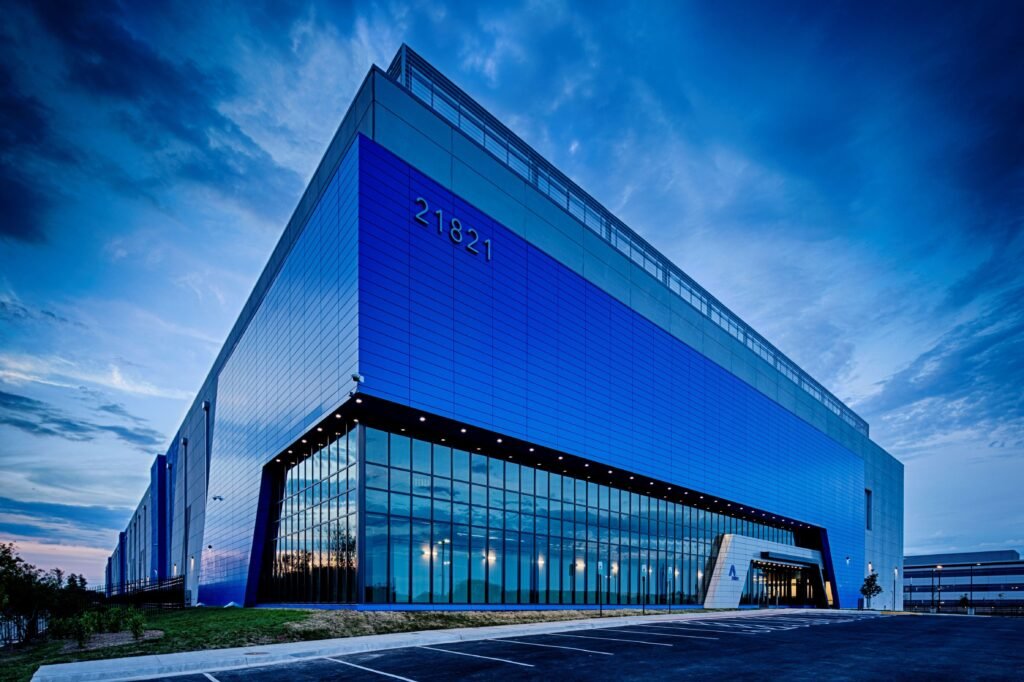
The primary reason is growing demand for AI computing. Every time an AI model is trained, updated, or used to answer a question, it requires computing resources. More sophisticated models and larger workloads can increase that demand considerably.
Traditional cloud services already depend on data centers to store files host websites, operate applications, and process business information. AI adds new workloads that can require large numbers of specialized processors working together.
Companies are investing in AI data centers for several connected reasons.
1. AI Models Need More Computing Power
Training an advanced AI model can require thousands of specialized processors working together for extended periods. These processors perform the mathematical operations that help models learn patterns from data.
After training, the model still needs computing power to answer user questions, generate images, analyze documents, write code, and complete other tasks. This stage is commonly called inference.
The growing use of AI assistants, coding tools, image generators, enterprise AI, and automated agents creates demand for computing capacity beyond the initial model-training process.
2. AI Services Need to Respond Quickly
Users expect AI applications to respond without long delays. Businesses also need dependable systems when AI becomes part of customer service, software development, research, or daily operations.
A company serving millions of users must provide enough AI infrastructure investment riskscomputing capacity to handle demand during busy periods. It also needs networking, storage, backup systems, and infrastructure that can keep services running reliably.
This is one reason companies invest in new facilities even while existing data centers remain operational.
3. Companies Want to Compete in the AI Market
AI infrastructure can influence how quickly a company develops products, improves its models, and serves customers.
Cloud providers can rent computing capacity to businesses and developers. Consumer technology companies can use the same infrastructure to improve search, productivity tools, social platforms, and AI assistants.
Companies that own or control enough computing capacity may have greater flexibility to develop new services and meet rising customer demand.
How Much Are Tech Companies Spending on AI Infrastructure in 2026?
There is no single figure that captures every AI data center investment. Some numbers represent a company’s annual capital expenditure, while others describe a multiyear infrastructure commitment, an individual construction project, or financing raised for future expansion.
The distinction matters because these amounts should not simply be added together.
For example, a company’s capital expenditure may include servers, networking equipment, data center buildings, and other technical infrastructure. A separate announced project may already be included in that broader spending plan.
Major Technology Companies and Their AI Investment Plans
The following figures illustrate the scale of investment being discussed in 2026. They are based on company announcements and financial reporting available by October 10, 2026.
| Company | Reported plan or investment | What it means |
|---|---|---|
| Microsoft | Approximately $175 billion in calendar-year 2026 capital expenditure under its updated outlook | Spending supports computing capacity, including AI-related infrastructure. |
| Alphabet (Google) | $180–190 billion in expected 2026 capital expenditure | The company says the overwhelming majority is intended for technical infrastructure. |
| Amazon | Approximately $200 billion in expected 2026 capital expenditure | Amazon has cited AI, chips, cloud computing, and other long-term opportunities. |
| Meta | $115–135 billion in expected 2026 capital expenditure | The company has identified investment in its AI efforts and core business as key drivers. |
Sources: Microsoft investor guidance, Alphabet’s June 2026 investor presentation, Amazon’s earnings announcement and Meta’s 2025 results.
These figures are not directly comparable in every respect. Companies use different fiscal calendars, accounting treatments, and definitions of capital expenditure. They also revise forecasts as equipment prices, construction schedules, and business demand change.
The figures should therefore be understood as evidence of the investment scale, rather than a precise total of money spent exclusively on AI data centers.
Why Are These Investments So Large?
Building an AI data center involves much more than purchasing servers.
A large project can require land, construction, electrical substations, transmission connections, backup power systems, cooling equipment, networking hardware, and specialized processors. Some projects also require developers to secure new electricity generation capacity.
For example, Alphabet’s financial filings reported $80.6 billion in capital expenditure during the first half of 2026 and described plans to significantly increase investment in technical infrastructure. Its filings also showed substantial future lease commitments associated primarily with data centers.
The money is not all spent at once. Facilities may take years to plan, build, connect to the grid, and equip with operational hardware.
Why AI Needs More Data Centers
Understanding why AI needs more data centers starts with the difference between developing a model and operating it at scale.
Model training involves processing large datasets and adjusting a model’s internal parameters. Once the model is deployed, it must process requests from users and applications. A popular service can receive enormous numbers of requests, each requiring computing resources.
AI workloads also vary. Generating a short response, analyzing a long document, creating a video, and running an autonomous software agent do not necessarily require the same amount of computing.
As AI products become more capable, companies may need additional servers to support these different tasks.
Training and Inference Have Different Requirements
Training often requires large clusters of accelerators working together. Inference can involve a wider range of workloads, from short responses to lengthy reasoning tasks.
Both create demand for processors, memory, storage, and fast networking. Companies must decide how much capacity to build for training, how much to reserve for customer-facing services, and how to distribute workloads across regions.
AI Agents Can Add to Computing Demand
AI agents can perform sequences of tasks rather than simply answer a single question. Depending on their design, they may search information, AI data center demand and future growth use tools, analyze results, and repeat steps until they reach a goal.
These processes can involve multiple model calls and additional software services. If businesses adopt AI agents widely, they could create new sources of demand for cloud computing.
That does not mean every AI agent consumes enormous resources. The workload depends on the model, task complexity, tools used, and how efficiently the system operates.
How AI Data Centers Work
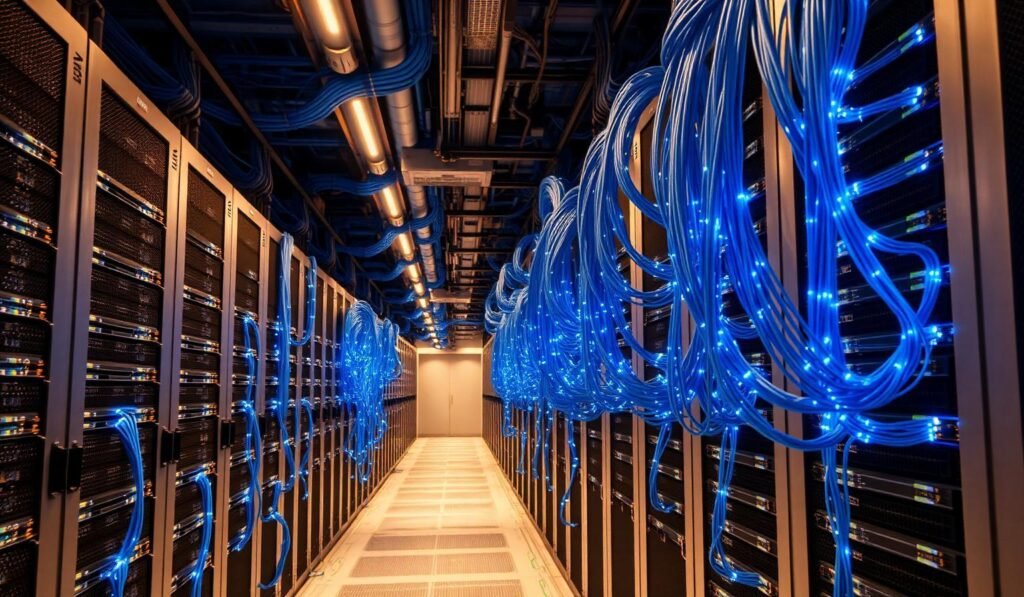
An AI data center is a facility that houses computing equipment and the supporting systems required to operate it.
Its main components include:
- AI accelerators: Specialized processors used for computationally intensive AI workloads.
- CPUs: General-purpose processors that manage many tasks and support AI systems.
- Memory and storage: Components that hold model data, application information, and other required information.
- Networking equipment: Systems that allow servers to communicate and exchange data.
- Power infrastructure: Electrical equipment that supplies and distributes electricity.
- Cooling systems: Equipment that removes heat generated by servers and other hardware.
- Monitoring and security: Systems that manage reliability, physical access, and cybersecurity.
All these components must work together. Purchasing powerful processors alone does not create a functioning AI data center.
A facility also needs reliable electricity, appropriate building design, network connectivity, trained operators, and maintenance. If any essential component is delayed, the facility may not deliver its planned computing capacity on schedule.
Why AI Data Centers Consume So Much Electricity
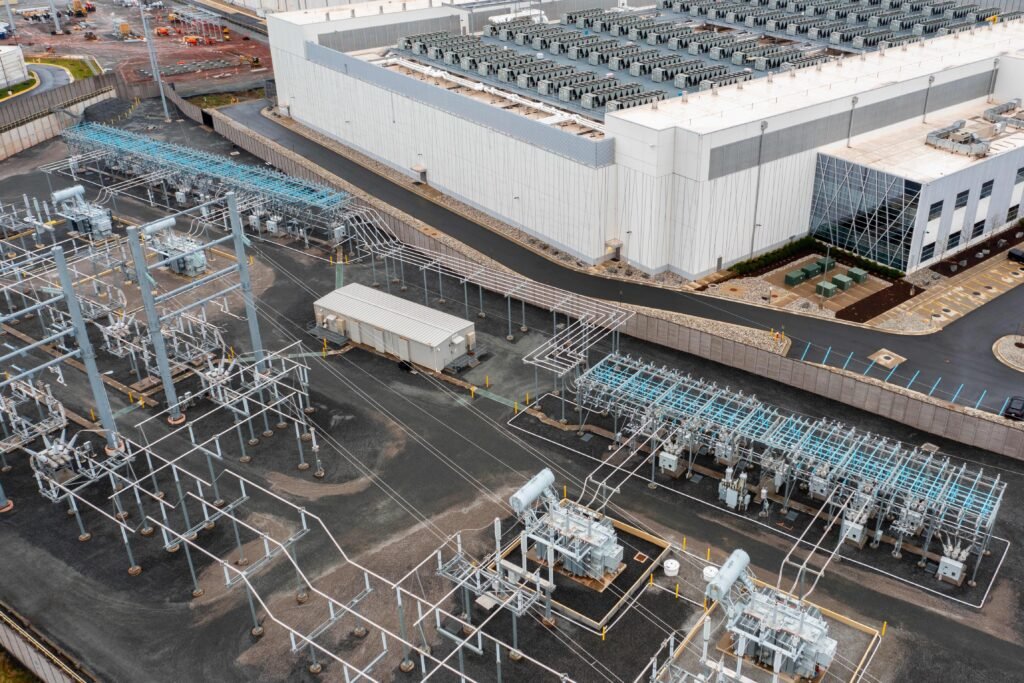
Electricity is one of the most important constraints on AI infrastructure growth.
Processors use electricity to perform calculations. The power consumed by servers becomes heat, which must be removed to keep equipment operating within safe temperature limits. Networking, storage, lighting, and other facility systems also consume energy.
As a result, a data center’s total electricity demand includes both computing equipment and the infrastructure that supports it.
What Do the Electricity Numbers Show?
A U.S. Department of Energy report based on research by Lawrence Berkeley National Laboratory estimated that U.S. data centers consumed 192 terawatt-hours of electricity in 2024, equivalent to approximately 4.7% of total U.S. electricity consumption. Its updated reference scenario projected data center electricity use could reach 464 TWh in 2028.
These are figures for U.S. data centers overall, not AI data centers alone. They should not be interpreted as an exact measurement of AI-only electricity consumption.
Nevertheless, they demonstrate why the expansion of computing infrastructure has become an energy planning issue.
Can AI Data Centers Increase Electricity Prices?
They can contribute to pressure on local electricity systems, but the effect depends on where facilities are built and how the electricity system responds.
A new facility may require upgrades to transmission lines, substations, and power generation. If these costs are not allocated appropriately, existing customers may face some of the financial burden through electricity rates.
The outcome is not automatic. New generation, better grid planning, long-term power agreements, and carefully designed rate structures can reduce some risks.
The key question is whether electricity infrastructure can expand quickly enough to meet demand without creating unfair costs or reducing reliability for other users.
Why Power Availability Can Delay Data Centers
A developer may have land, funding, and servers ready but still lack sufficient grid capacity.
Connecting a large data center to the electricity network can require planning approvals, new transmission equipment, substations, and additional power supply. These projects can take years.
A recent example illustrates the scale involved: Black Hills announced plans to invest $1.8 billion between 2027 and 2029 in electricity generation capacity intended to support a proposed Google data center in Cheyenne, Wyoming.
The announcement is a planned power investment, not a claim that the full amount has already been spent or that every dollar is being invested directly by Google.
Why AI Data Centers Need Advanced Cooling Systems
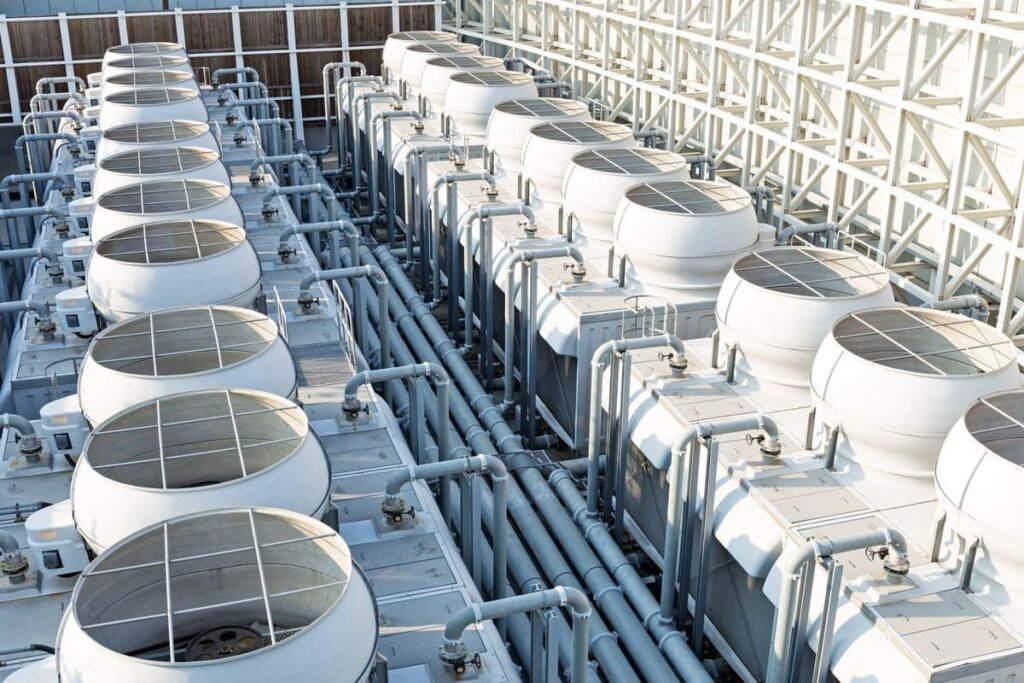
AI processors generate heat while performing calculations. High-density server racks can concentrate substantial amounts of heat in a relatively small space.
If the temperature becomes too high, equipment can operate less efficiently, throttle performance, or suffer damage. Cooling is therefore essential to reliable operations.
Air Cooling and Liquid Cooling
Traditional air-cooling systems move chilled air through equipment and remove hot air from the facility.
Liquid cooling can transfer heat more efficiently in certain high-density environments. Some systems move coolant close to the components that generate the most heat, while others use specialized heat exchangers.
The appropriate solution depends on processor design, rack density, climate, facility layout, water availability, and operating costs.
Cooling also requires equipment and energy. These expenses become part of the total cost of operating an AI data center.
How Cooling Affects the Cost of AI Infrastructure
The financial cost of cooling includes equipment, installation, electricity, maintenance, and potentially water treatment or water supply.
A facility designed for high-density AI servers may need a different cooling architecture from one built for conventional cloud workloads.
Companies must therefore consider cooling requirements before construction, rather than treating cooling as a small addition after the servers arrive.
AI Data Center Water Usage and Environmental Impact
Water is another important consideration, especially in regions where supplies are limited.
Some data centers use water in cooling processes. Water can also be consumed indirectly when electricity is generated, depending on the power source. Semiconductor manufacturing adds another part of the broader water footprint associated with computing hardware.
A 2026 study published in Water Research highlighted these different sources of AI-related water use and emphasized the need for better transparency and governance.
Why Location Matters
A data center using water in a water-rich region can face different environmental challenges from one built in an area experiencing drought or water shortages.
Local conditions matter. The source of the water, cooling technology, weather, electricity mix, and competing community needs all influence the potential impact.
This is why a single global water-use figure cannot explain the environmental effect of every facility.
How Companies Can Reduce Water and Energy Impacts
Potential approaches include:
- Selecting cooling systems suited to local conditions.
- Improving the efficiency of servers and facility operations.
- Using reclaimed or recycled water where appropriate.
- Procuring lower-carbon electricity and developing new energy capacity.
- Reporting electricity and water use more transparently.
- Consulting local communities before expanding facilities in sensitive areas.
These solutions involve trade-offs. A cooling system that reduces water use may have different energy requirements, AI data centers in 2026 while renewable electricity procurement does not automatically solve local grid constraints.
The aim should be to assess the whole system, not optimize one environmental measure while ignoring the others.
The Biggest Risks of AI Infrastructure Investment
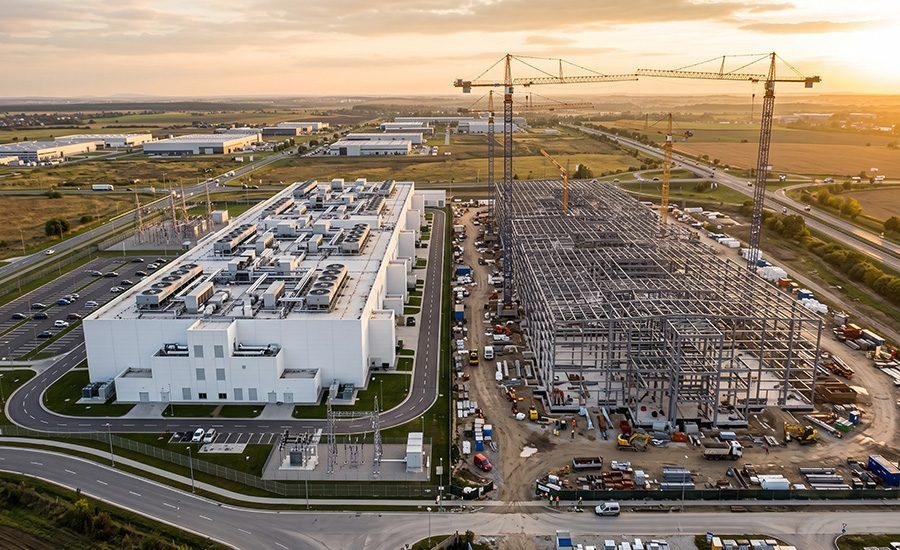
The rapid growth of AI infrastructure creates opportunities, but it also exposes companies and investors to significant risks.
1. AI Demand May Not Meet Expectations
Companies are investing today based on expectations about future AI adoption and revenue.
If customers use AI services less than expected, or if businesses are unwilling to pay enough for them, some facilities could generate lower returns than anticipated.
This risk becomes more serious when projects require large upfront commitments and take years to complete.
2. Equipment Can Become Outdated
AI hardware develops quickly. A data center built around one generation of processors may need upgrades as newer chips offer different performance, energy efficiency, or memory capabilities.
Buildings and power infrastructure can remain AI data centers in 2026 useful for many years Artificial intelligence aur technology but servers and accelerators may have shorter economic lives.
Investors must consider whether the facility can accommodate future hardware without requiring expensive redesigns.
3. Construction and Power Delays Can Raise Costs
Construction projects can be delayed by permitting, labor shortages, equipment availability, supply-chain problems, or a lack of electricity.
A facility that opens late may miss the period when its planned computing capacity was most valuable. Meanwhile, financing costs and other commitments may continue.
4. Financing Can Become More Expensive
Large data center projects may be funded through corporate cash flow, debt, project financing, partnerships, or equity.
Higher interest rates can increase borrowing costs, AI data centers in 2026 particularly for projects that depend on external financing. Investors also need to consider how long it will take for a project to generate cash.
J.P. Morgan has identified power availability, supply-chain constraints, and permitting timelines as important execution risks in AI infrastructure financing.
5. Environmental and Community Opposition
Communities may raise concerns about electricity prices, water consumption, noise, construction traffic, and the use of local land.
If a project lacks community support or fails to meet AI data centers in 2026 regulatory requirements, it can face delays or restrictions.
Companies must therefore treat local infrastructure and community relations as part of project planning, not as issues to address only after opposition develops.
Could AI Data Center Investment Become a Bubble?
The question of an AI data center investment bubble has become increasingly important as companies commit extraordinary amounts of capital to computing infrastructure.
A bubble generally involves asset prices or investment expectations becoming disconnected from the underlying economic value that can realistically be generated.
Large investment alone does not prove that a bubble exists. Nvidia AI spending A technology can create substantial long-term value while still attracting projects that are overpriced, poorly timed, or unlikely to earn adequate returns.
The important question is whether AI-generated revenue and productivity improvements will eventually justify the costs of building and operating the infrastructure.
Reuters reported in October 2026 that investors and AI data centers in 2026 economists were questioning whether anticipated productivity gains would arrive quickly enough to support the scale of AI spending. The report also discussed the challenge of financing the infrastructure and generating sufficient returns.
Signs Investors Should Watch
Several indicators can help explain whether the market is developing sustainably:
- Growth in revenue from AI products and cloud services.
- Utilization rates for newly built data centers.
- Operating costs relative to revenue.
- The amount of debt required to fund expansion.
- Delays in construction or grid connections.
- Changes in customer demand and pricing.
- Whether AI productivity gains are measurable in real businesses.
No single indicator can determine whether the entire AI infrastructure market is overvalued. Investors need to examine individual companies, projects, and financing structures.
When Could AI Data Center Investments Become Profitable?
There is no universal timeline for profitability.
Some facilities support established cloud services with existing customers and revenue. Others are built in anticipation of future demand and may require years to reach their planned utilization.
A project’s financial outcome depends on construction costs, financing terms, electricity prices, cooling expenses, hardware depreciation, customer contracts, AI data centers in 2026 and how efficiently the infrastructure is used.
Revenue From Cloud Computing
Cloud providers can earn revenue by renting computing capacity, storage, networking, and AI services to customers.
If AI demand grows and customers pay enough to cover the cost of providing those services, additional infrastructure can support profitable growth.
However, rising usage does not automatically guarantee higher profits. Companies must also account for the cost of hardware, power, maintenance, staffing, and financing.
Productivity Gains Inside Businesses
Some companies invest in AI infrastructure to support internal tools, software development, research, customer support, and other business operations.
These benefits can be difficult to measure. A business may save time or improve service quality without generating an immediate new revenue stream.
That makes it important to evaluate productivity improvements separately from direct cloud-service revenue.
Why Profitability Can Vary
Two data centers of similar size can have very different financial outcomes because of location, energy prices, construction costs, customer commitments, and utilization.
A facility with reliable power and strong demand AI data centers in 2026 may perform well, while another facing grid delays or weak customer demand may struggle.
The most meaningful measure is not simply how much a company invests, but whether the resulting infrastructure produces sustainable value over its useful life.
What AI Data Center Expansion Means for the Future
AI data centers are becoming a strategic part of the technology industry. They connect AI software to the physical resources required to train models, serve customers, and support new applications.
This expansion could create demand for semiconductor manufacturing, electrical equipment, cooling technology, construction, energy generation, networking, and data center operations.
It could also encourage investment in power grids and more efficient computing systems.
OpenAI’s Stargate initiative provides one example of the scale of these ambitions. In April 2026, OpenAI said it had surpassed its initial goal of securing 10 gigawatts of AI infrastructure in the United States by 2029, reporting that more than 3 gigawatts had been added in the preceding 90 days. This is a company-reported infrastructure milestone, not a statement that all of the capacity was already operational.
What This Means for Small Businesses
Small businesses generally do not need to construct their own data centers to benefit from AI.
They can access AI tools through cloud services and use them for writing, customer support, software development, research, and workflow automation.
However, infrastructure investment may affect the cost, availability, and performance of these services over time. The benefits businesses experience will depend on the tools they use and the value those tools deliver.
What This Means for the Energy Industry
AI infrastructure creates demand for reliable power and can encourage investment in electricity generation, grid equipment, and energy storage.
It also creates difficult planning questions. Energy companies and regulators must balance the needs of data centers against those of households, manufacturers, and other electricity users.
Long-term planning will be important because power infrastructure often takes years to develop.
Final Thoughts
The reason tech companies are investing billions in AI data centers in 2026 is straightforward: AI requires computing infrastructure, and companies expect demand for that infrastructure to continue growing.
Microsoft, Google, Amazon, Meta, and other technology companies are committing substantial resources to servers, data center facilities, networking, and related systems. Their investments reflect the opportunity to serve AI customers, improve their own products, and compete in a market that could reshape many industries.
But the expansion is not without risks. Electricity availability, cooling costs, water use, construction delays, financing, and uncertain returns could determine which projects succeed.
The real measure of AI infrastructure success will not be the number of data centers built or the billions committed. It will be whether those facilities deliver useful computing capacity, sustainable operations, and enough economic value to justify their costs.
For businesses and investors, the key is to look beyond the headline spending figures. Understand what a company has actually committed, when the infrastructure is expected to operate, how it will be powered, and where the revenue or productivity benefits are supposed to come from.
AI data center investment could help build the foundations of a more capable digital economy. Whether it produces sustainable returns will depend on execution, efficiency, and the ability to turn growing AI demand into real economic value. Explore more technology insights and AI updates on DailyScriptor.
Frequently Asked Questions
Why are tech companies investing billions in AI data centers?
They need computing capacity to train AI models, run AI assistants, serve cloud customers, and support growing AI workloads. Data centers provide the servers, networking, power, and cooling required for these services.
How much are tech companies spending on AI infrastructure in 2026?
J.P. Morgan estimated that major hyperscalers’ capital expenditure could reach approximately $697 billion in 2026. This is an estimate for a group of large cloud providers, not a verified total for every AI data center investment worldwide.
Which companies are investing the most in AI data centers?
Microsoft, Alphabet, Amazon, and Meta have announced or reported substantial 2026 capital expenditure plans. Their figures include different types of technical infrastructure and should not be treated as spending exclusively on AI data centers.
Why do AI data centers use so much electricity?
AI servers perform intensive calculations and generate heat. Electricity is needed to run the processors, networking equipment, storage, and cooling systems that keep the facility operating.
Can AI data centers increase electricity prices?
They can put pressure on local electricity systems and may require costly grid upgrades. The effect on consumer bills depends on local power supply, infrastructure investment, regulation, and how costs are allocated.
Why do AI data centers need water?
Some cooling systems use water to remove heat. Water may also be consumed indirectly during electricity generation and semiconductor manufacturing. The amount varies by facility design, location, and energy source.
Could AI data center investment become a bubble?
It is possible that some projects could be overbuilt or fail to earn adequate returns, but large investment alone does not prove that the entire market is a bubble. Revenue growth, infrastructure utilization, financing costs, and customer demand are important indicators.
When will AI data center investments become profitable?
There is no single timeline. Profitability depends on construction costs, electricity prices, financing, hardware depreciation, customer demand, and how effectively the computing capacity is used.
What are the biggest risks of AI data center investment?
Major risks include weak-than-expected AI demand, high operating costs, hardware becoming outdated, construction delays, power shortages, financing costs, environmental concerns, and community opposition.
How do AI data centers affect the environment?
Their impacts can include electricity demand, greenhouse-gas emissions depending on the power source, water consumption, land use, and construction-related effects. More efficient equipment, appropriate cooling systems, cleaner energy, and transparent reporting can help manage these impacts.