Table of Contents
Choosing between a hybrid and an electric car for a long trip depends on driving range, energy costs, charging availability, travel time, and convenience. Hybrid cars can travel long distances without charging stops, while electric vehicles (EVs) can offer lower energy costs and a quieter driving experience when reliable charging stations are available along the route.
For many drivers, the best option depends on where they travel, how often Hybrid vs Electric Cars for Long Trips they take road trips, and whether they can plan their stops around charging stations.
The main difference is convenience versus charging needs: hybrids are generally easier to refuel on unfamiliar routes, while electric cars can be an excellent choice for long-distance travel when charging infrastructure and route planning are reliable.
Hybrid vs Electric Cars for Long Trips: Key Differences
A hybrid car combines a gasoline engine with an electric motor and battery. Automotive Guide 2026 hybrids recharge their batteries through regenerative braking and the engine, so drivers do not need to plug them in.
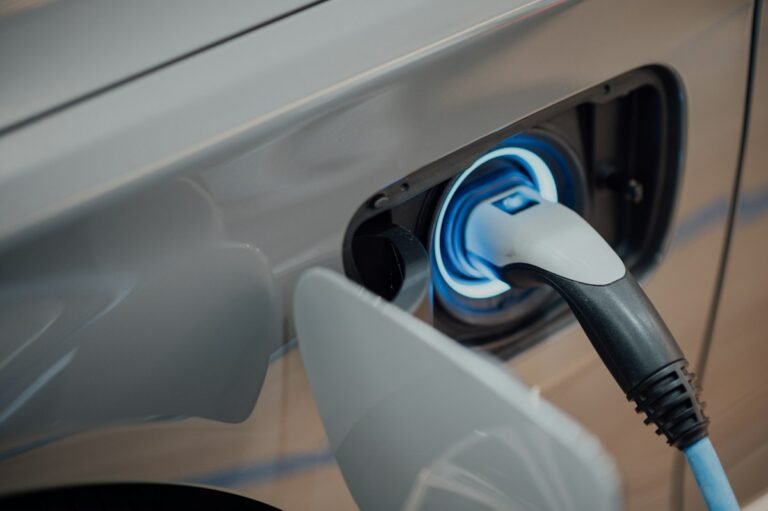
An electric car runs on electricity stored in a rechargeable battery. It needs charging stations or a suitable home charger, but it does not require gasoline.
Plug-in hybrid electric vehicles (PHEVs) sit between these two options. They can travel a limited distance using electricity before relying on gasoline, depending on the model and battery charge.
| Feature | Hybrid car | Electric car |
|---|---|---|
| Energy source | Gasoline and electric power | Electricity |
| Refueling or charging | Gas stations | Charging stations |
| Long-distance convenience | Usually straightforward | Depends on charging availability |
| Highway energy costs | Depends on fuel economy and gas prices | Depends on electricity and charging prices |
| Tailpipe emissions | Produces emissions when the engine runs | No tailpipe emissions |
| Charging stops | Not required for conventional hybrids | Usually required on longer journeys |
| Best suited for | Routes with limited charging access | Routes with dependable fast charging |
The table describes general differences. Actual range, efficiency, charging speed, and costs vary by vehicle model, weather, driving speed, and road conditions.
1. Which Has Better Driving Range for Long Trips?
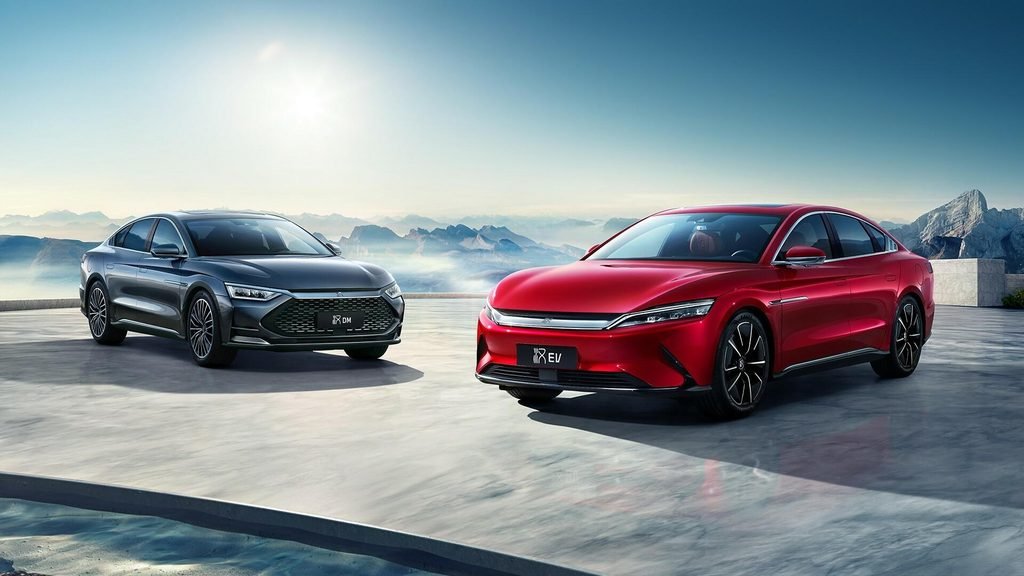
Driving range is one of the most important factors when comparing hybrid vs electric cars for long trips.
A conventional hybrid can keep traveling as long as it has gasoline available. Because it can refuel at ordinary gas stations, it is often convenient for rural roads, unfamiliar destinations, and routes where EV chargers are scarce.
An electric car’s range depends on its battery capacity and energy consumption. Many modern EVs offer enough range for everyday driving and numerous road trips but drivers must plan charging stops when the journey exceeds the usable battery range.
Highway driving can reduce an electric car’s range because maintaining higher speeds requires more energy. Cold weather, strong headwinds, steep climbs, and using cabin heating can reduce it further.
Which is better? A hybrid is often more convenient when the route has limited charging infrastructure. An EV can work very well for long journeys when its real-world range and charging locations fit the planned route.
2. Hybrid vs Electric Cars for Highway Driving
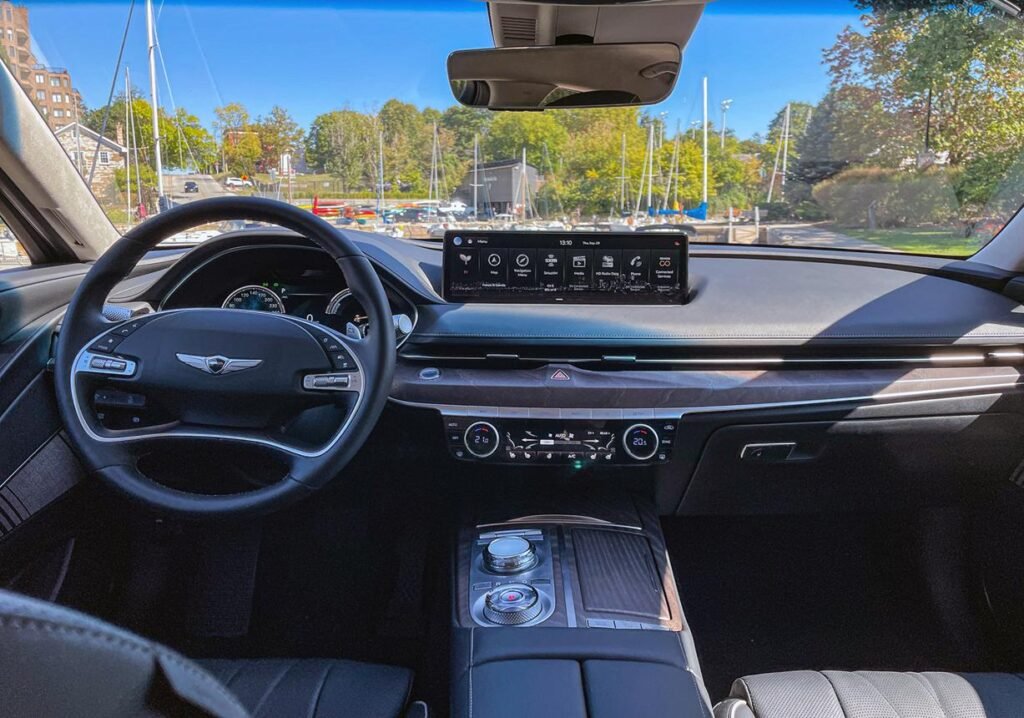
Highway driving changes how both types of vehicles use energy.
Hybrid cars can be efficient on highways, although some hybrids achieve their biggest fuel-economy advantage in stop-and-go traffic, where regenerative braking recovers energy. At sustained highway speeds, the gasoline engine may do more of the work.
Electric vehicles use electric motors that convert energy Hybrid vs Electric Cars for Long Trips efficiently, but aerodynamic drag increases with speed. Driving significantly faster than the vehicle’s most efficient cruising speed can reduce its range.
Drivers comparing hybrid cars vs electric cars for highway driving should check highway-specific efficiency figures rather than relying only on advertised combined fuel economy or maximum battery range.
Other factors matter too, including cabin comfort, luggage space, driver-assistance features, road noise, and seat support. These can make a meaningful difference during a six- or eight-hour journey.
3. Which Is Cheaper for a Long Road Trip?
The answer depends on local gasoline prices, electricity rates, charging fees, and vehicle efficiency.
A hybrid uses gasoline, so its trip cost depends mainly on fuel economy and the amount of fuel required. An EV uses electricity, and its cost depends on how much energy it consumes and where it charges.
Example: Comparing energy costs
Consider a hypothetical 500-mile trip:
- Hybrid fuel economy: 45 miles per gallon
- Gasoline price: $3.50 per gallon
- EV energy consumption: 3.5 miles per kWh
- Electricity price: $0.20 per kWh
For the hybrid:
500 miles ÷ 45 mpg × $3.50 = approximately $38.89
For the EV:
500 miles ÷ 3.5 miles per kWh × $0.20 = approximately $28.57
In this example, the EV’s energy cost is about $10.32 lower for the trip. These figures are illustrative, not current national averages. Real costs will differ based on vehicle efficiency and local prices.
Public fast charging can cost substantially more than charging at home. Therefore, an EV that is inexpensive to charge overnight may cost more to operate on a road trip that relies heavily on expensive public chargers.
For an accurate hybrid vs electric car running- Hybrid vs Electric Cars for Long Trips cost comparison, use the specific vehicles you are considering and the prices along your actual route.
4. How Much Time Do Charging Stops Add to an EV Road Trip?
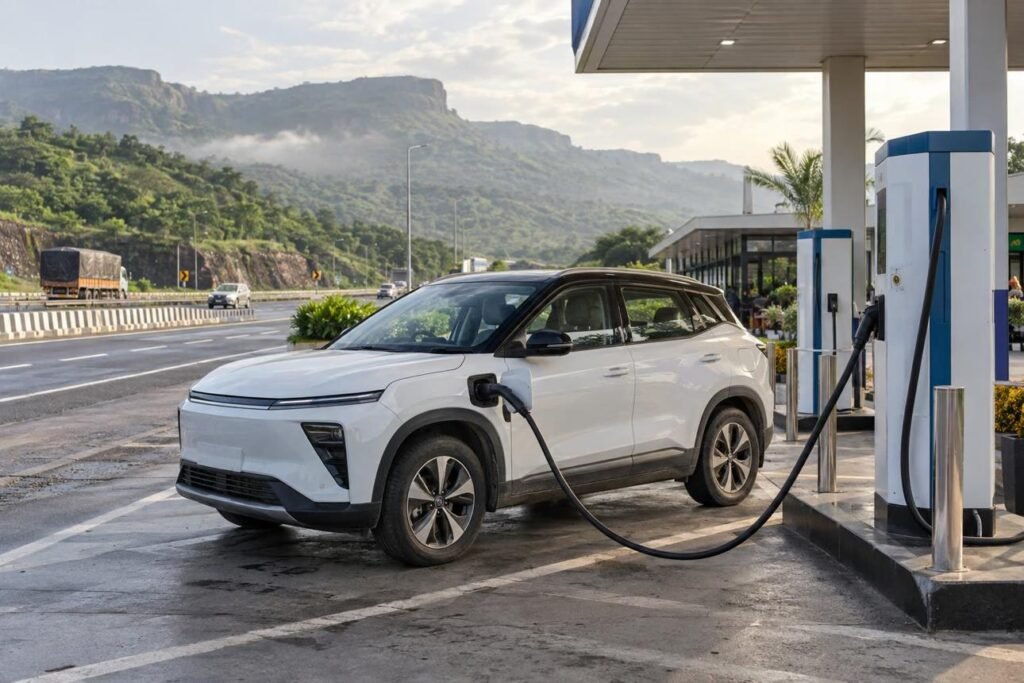
Charging time is another important consideration.
A hybrid generally needs only a short gasoline stop when its tank runs low. Refueling time is usually predictable, and gas stations are widely available across many regions.
An electric vehicle may require one or more charging stops during a long journey. The time required depends on the battery’s current charge, the charger’s power, the vehicle’s maximum charging rate, battery temperature, and whether another charger is available if the first is occupied.
A charging stop can also be an opportunity to eat, stretch, or rest. If the vehicle charges while passengers take a planned break, the additional travel time may feel less significant.
Before a long EV trip, check the charging network, charger compatibility, availability, and backup options. Do not assume that every station will be operational or available when you arrive.
5. Are Electric Cars Practical for Long Road Trips?
Yes, electric cars can be practical for long road trips, especially on routes with dependable fast-charging infrastructure.
Planning is easier when drivers know their vehicle’s real-world highway range, identify charging stops in advance, and leave a suitable battery reserve for unexpected delays.
Useful preparation steps include:
- Map charging stations along the full route.
- Check whether stations support the vehicle’s connector and charging speed.
- Keep a backup charging location for important stops.
- Allow for reduced range in cold weather or at higher speeds.
- Check charging availability before arriving in remote areas.
- Start with a suitable battery charge and avoid relying on the lowest possible reserve.
For drivers traveling through areas with few public chargers, a conventional hybrid may provide greater flexibility. For drivers traveling along well-served highways, an EV can be a comfortable and efficient road-trip vehicle.
6. What Happens if an EV Runs Out of Battery During a Trip?
If an electric car runs out of usable battery power, it cannot continue driving normally. The driver may need roadside assistance or a recovery service that can transport the vehicle to a charging point.
This situation is avoidable in most cases with sensible route planning. Drivers should account for weather, hills, highway speeds, detours, and charging-station availability instead of planning to arrive with almost no battery remaining.
A hybrid has a different limitation: if it runs out of gasoline, its battery generally cannot keep it driving indefinitely. A conventional hybrid is not a substitute for carrying enough fuel for the journey.
Both vehicles require planning, but the planning differs. EV drivers need to monitor charging access and battery range; hybrid drivers need to monitor fuel availability and fuel economy.
7. How Do Cold Weather and Mountain Roads Affect Range?
Weather and terrain can affect both vehicle types.
Cold weather can reduce EV range because Hybrid vs Electric Cars for Long Trips the battery operates less efficiently and the cabin may need energy for heating. Battery preconditioning, when supported, and using seat or steering-wheel heating can help manage energy consumption.
Hybrids can also use more fuel in cold weather, particularly on short trips when the engine must warm up. On a long journey, the impact depends on the model, temperature, and driving conditions.
Mountain routes add another consideration. Climbing requires energy, while regenerative braking can recover some energy during descents. Both hybrids and EVs can benefit from regenerative braking, although the amount recovered varies.
When comparing electric car range in cold weather with hybrid fuel economy, use real-world test results for the particular model and conditions rather than relying only on official range figures.
8. Hybrid vs Electric Car Maintenance and Reliability
Maintenance requirements differ because the vehicles use different powertrains.
Conventional hybrids have gasoline engines Hybrid vs Electric Cars for Long Trips and associated components, so they still require the relevant engine maintenance. They also have electric motors, batteries, and regenerative braking systems.
EVs do not require engine oil changes or routine maintenance for a gasoline engine. However, they still need tire checks, brake inspections, cabin filters, coolant or thermal-system maintenance where specified, and battery-system servicing according to the manufacturer’s schedule.
Neither type is automatically more reliable Hybrid vs Electric Cars for Long Trips in every situation. Reliability depends on the individual model, manufacturing quality, maintenance history, age, climate, and available service support.
Before buying a used hybrid or EV for frequent long-distance driving, review the service history, battery warranty, recall status, tire condition, and access to qualified repair facilities. Explore more practical automotive, technology, and everyday guides on DailyScriptor
9. Hybrid, Plug-In Hybrid, or Fully Electric: Which Should You Choose?
These three options suit different driving patterns.
Choose a conventional hybrid if:
- You frequently travel long distances through areas with limited chargers.
- You want to refuel at ordinary gas stations.
- You cannot reliably charge at home or work.
- You prefer not to plan journeys around charging stops.
Choose a fully electric car if:
- Your usual routes have reliable charging infrastructure.
- You can charge at home or at a convenient regular location.
- Lower energy costs and zero tailpipe emissions are priorities.
- Your chosen vehicle’s highway range suits your trips.
Consider a plug-in hybrid if:
- You can charge regularly for shorter journeys.
- You still need gasoline flexibility for occasional long trips.
- You understand its electric-only range and fuel economy once the battery charge is depleted.
A plug-in hybrid can be a useful compromise, but it is not automatically the best option. Its benefits depend on regular charging, the distance traveled, and how efficiently it operates after using its available electric range.
10. How to Choose the Best Car for Frequent Long-Distance Driving
Before making a decision, compare the actual vehicles rather than relying only on the hybrid or EV label.
- Estimate your typical distance. Work out the length of your regular journeys and the longest trips you take each year.
- Check real-world highway range. Consider weather, speed, terrain, and the amount of reserve you want.
- Calculate energy costs. Compare gasoline expenses with home charging and public charging prices.
- Map charging access. Look at the routes and destinations you use most often.
- Consider comfort and luggage space. Test the seats, cabin noise, cargo capacity, and driver-assistance features.
- Review total ownership costs. Include the purchase price, insurance, servicing, tires, warranty, and expected resale value.
The best vehicle is the one that fits your actual travel needs and budget, not necessarily the one with the lowest advertised running cost.
Frequently Asked Questions
Is a hybrid or electric car better for long trips?
A hybrid is often more convenient on routes with limited charging stations because it can refuel at gas stations. An EV can be equally practical on routes with reliable fast charging and may cost less to power.
Are electric cars cheaper for long-distance travel?
They can be, especially when charged at home or at affordable charging stations. Frequent public fast charging may reduce or eliminate the savings, so compare local prices and vehicle efficiency.
Are hybrid cars better for highway driving?
Some hybrids are excellent highway vehicles, but fuel economy varies by model and driving conditions. Compare highway-specific figures rather than assuming all hybrids perform equally well.
Are plug-in hybrids better than regular hybrids for road trips?
Plug-in hybrids offer electric driving for a limited distance and gasoline flexibility afterward. Their advantage is greatest when they are charged regularly and used for journeys that suit their electric range.
Do electric cars lose range at highway speeds?
Yes. Higher speeds generally increase energy consumption because aerodynamic drag rises. Cold weather, wind, elevation, and heating or cooling can also affect range.
Which is better for a cross-country road trip?
The best choice depends on the route. A hybrid may be easier across regions with limited charging infrastructure, while an EV can be a good choice on routes with well-distributed, dependable fast chargers.
Final Thoughts
When comparing hybrid vs electric cars for long trips, the deciding factors are charging access, real-world range, travel costs, and the routes you drive.
A conventional hybrid is often the simpler choice for remote destinations and unpredictable routes because gasoline refueling is widely available. An electric car can be an excellent long-distance option when charging stations are dependable and its highway range matches your travel needs.
Before purchasing either vehicle, compare specific models, estimate costs for your typical journey, and check the infrastructure along the routes you actually use. That approach will give you a more useful answer than choosing based on technology alone.