
Table of Contents
Glowing skin does not necessarily mean having perfectly clear or flawless skin. Healthy-looking skin usually comes from a combination of a consistent skincare routine, sun protection, hydration, balanced nutrition, adequate sleep, and habits that support the skin barrier.
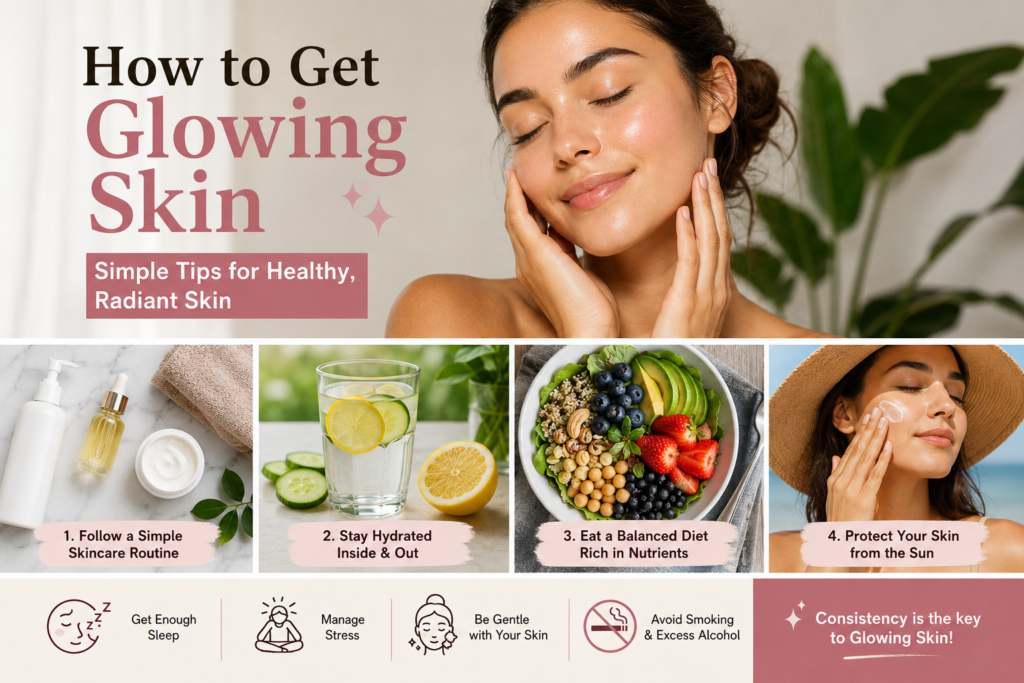
If you are wondering how to get glowing skin the good news is that you do not always need a complicated 10-step routine. A simple routine with the right products, used consistently, can be more useful than constantly changing products.
Your skin type, age, lifestyle, environment, and existing skin concerns all affect how your skin looks. Someone with oily skin may need a different routine from someone with dry or sensitive skin.
The goal should be healthy, comfortable skin rather than trying to achieve an unrealistic idea of perfection.
What Does Glowing Skin Really Mean?
Glowing skin how to get glowing skin generally looks healthy, hydrated smooth, and relatively even in tone.
It does not mean that your skin must be completely free from:
- Pores
- Fine lines
- Small blemishes
- Dark spots
- Natural texture
- Scars
Real skin has texture.
Instead of chasing perfect skin, focus on maintaining a healthy skin barrier and protecting your skin from environmental damage.
A consistent routine can help your skin look more balanced over time.
How to Get Glowing Skin With a Simple Routine
One of the biggest skincare mistakes is assuming that more products automatically produce better results.
In reality, a basic routine can be enough for many people.
A simple routine usually includes:
- Gentle cleanser
- Moisturizer
- Sunscreen
- Optional targeted treatment
The American Academy of Dermatology recommends gentle how to get glowing skin cleansing, regular moisturizing, and daily sun protection as important foundations of healthy-looking skin.
Consistency matters more than having a large collection of skincare products.
Know Your Skin Type
Before choosing products, try to understand your skin type.
Dry Skin
Dry skin may feel tight, rough, flaky, or uncomfortable.
Look for moisturizing products that support the skin barrier. Ingredients such as ceramides and hyaluronic acid are commonly used in moisturizers designed to improve hydration.
Oily Skin
Oily skin can appear shiny and may be more prone to clogged pores.
Choose lightweight, non-comedogenic products where appropriate and avoid aggressively scrubbing your skin.
Combination Skin
Combination skin can be oily in some areas and dry in others.
A balanced routine is usually better than treating the entire face as either completely oily or completely dry.
Sensitive Skin
Sensitive skin may sting, burn, become red, or react easily to products.
A gentle, fragrance-free routine may be more appropriate. If a product repeatedly causes irritation, stop using it and consider discussing your skin with a dermatologist.
Normal Skin
Normal skin generally has a relatively balanced oil and moisture level.
Even so, daily cleansing, moisturizing, and sun protection remain useful.
Morning Skincare Routine for a Healthy Glow
Your morning routine does not need to be complicated.
Step 1: Cleanse Gently
Start with a gentle cleanser if your skin needs cleansing in the morning.
Avoid harsh scrubbing because irritation can make some skin problems worse.
The American Academy of Dermatology recommends washing the face gently and avoiding aggressive scrubbing.
Step 2: Apply Moisturizer
Moisturizer helps maintain the skin’s moisture barrier.
Apply it according to your skin’s needs.
People with oily skin may prefer lightweight formulas, while dry skin may benefit from richer moisturizers.
Step 3: Use Sunscreen
Sunscreen is one of the most important steps in a daytime skincare routine.
Look for broad-spectrum sunscreen with SPF 30 or higher.
The American Academy of Dermatology recommends broad-spectrum SPF 30 or higher and emphasizes regular sun protection to help reduce UV-related skin damage and premature aging.
If you spend extended time outdoors, follow the product directions for reapplication.
Night Skincare Routine
Nighttime gives you an opportunity to keep your routine simple and consistent.
Start by removing makeup, sunscreen, dirt, and excess oil.
Then:
- Use a gentle cleanser
- Apply a treatment if appropriate
- Moisturize your skin
You do not need to use multiple active ingredients every night.
Introducing too many products at once can make it difficult to know what is helping or causing irritation.
Hydration and Glowing Skin
Hydration is frequently associated with healthy-looking skin, but drinking excessive amounts of water is not a magic solution.
Research on increased water intake and skin hydration is still limited, although some evidence suggests that additional water intake may improve certain measures of skin hydration, particularly in people with lower baseline fluid intake.
The practical approach is simple:
- Drink enough fluids for your body’s needs
- Eat water-rich foods
- Use moisturizer when your skin needs it
- Avoid relying on water alone for skincare
If you are searching for how to get glowing skin naturally, hydration should be considered part of a healthy lifestyle rather than a quick beauty trick.
Eat a Balanced Diet
Your skin is part of your body, so nutrition matters.
A balanced diet can provide nutrients that support normal skin function.
Consider including:
- Fruits
- Vegetables
- Nuts
- Seeds
- Whole grains
- Beans and legumes
- Eggs
- Fish
- Other nutrient-rich foods
A 2024 review published in Nutrition discussed the relationship between diet and skin health and highlighted the potential importance of nutrient-rich foods, antioxidants, fruits, vegetables, nuts, and legumes.
You do not need a special “glowing skin diet.”
Focus on a varied and balanced diet instead.
Do Not Forget Sleep
Sleep is another important lifestyle factor.
When you consistently get poor sleep, you may notice that your skin looks tired or dull.
A healthy sleep schedule supports overall health and can make it easier to maintain healthy daily habits.
Instead of looking for a single skincare product to transform your appearance overnight, build a routine that includes:
- Regular sleep
- Balanced nutrition
- Physical activity
- Stress management
- Basic skincare
These habits work together.
Protect Your Skin From the Sun
If your goal is healthy-looking skin, daily sun protection should not be optional.
UV exposure contributes to premature skin aging and can cause other forms of skin damage.
Sunscreen is particularly important when spending time outdoors.
Along with sunscreen, you can also use:
- Shade
- Protective clothing
- Hats
- Sunglasses
The American Academy of Dermatology recommends broad-spectrum, water-resistant SPF 30 or higher when appropriate, with reapplication during extended outdoor exposure.
Sun protection is one of the most practical long-term skincare habits.
Exfoliation: Do You Really Need It?
Exfoliation can help remove dead surface skin cells, but more is not always better.
Over-exfoliating can irritate the skin and damage its protective barrier.
If you choose to exfoliate, start slowly and pay attention to how your skin reacts.
Avoid combining several strong exfoliating products simply because you want faster results.
Your skin does not need to feel tight or irritated after exfoliation.
Skincare Ingredients That Can Help
Different ingredients are designed for different concerns.
Hyaluronic Acid
Hyaluronic acid is commonly used in moisturizing products because of its ability to help support skin hydration.
Ceramides
Ceramides are lipids that help support the skin barrier and are commonly found in moisturizers for dry skin.
Vitamin C
Vitamin C is widely used in skincare products designed to support brighter-looking skin and address uneven tone.
However, formulations vary, and sensitive skin may react to certain products.
Niacinamide
Niacinamide is another popular skincare ingredient used in products targeting concerns such as uneven tone, oiliness, and the appearance of pores.
The best ingredient depends on your specific skin concern.
Common Skincare Mistakes to Avoid
Sometimes improving your skincare routine means removing unnecessary habits.
Washing Your Face Too Aggressively
Scrubbing harder does not necessarily make skin cleaner.
It can cause irritation.
Using Too Many Products
Adding several new products at the same time can increase the chance of irritation.
Introduce products gradually.
Skipping Sunscreen
Even an excellent nighttime routine cannot replace daytime sun protection.
Picking at Blemishes
Touching or picking spots can increase irritation and may contribute to marks or scarring.
Changing Products Too Quickly
Skincare usually requires consistency.
Changing products every few days makes it difficult to determine whether something is actually working.
How to Get Glowing Skin Without Spending a Lot
You do not need expensive skincare products to create a basic routine.
A simple routine can focus on:
Morning
- Gentle cleanser
- Moisturizer
- SPF 30+ sunscreen
Night
- Gentle cleanser
- Moisturizer
- One targeted treatment if needed
The American Academy of Dermatology also recommends practical budget-friendly approaches such as gentle cleansing, moisturizing, and sun protection rather than relying on an excessive number of products.
The most expensive product is not automatically the best product for your skin.
How to Get Glowing Skin Naturally
Natural-looking skin usually comes from consistent habits rather than a single home remedy.
Focus on:
- Balanced nutrition
- Adequate hydration
- Regular sleep
- Sun protection
- Gentle cleansing
- Moisturizing
- Stress management
- Avoiding smoking
Be careful with DIY skincare trends.
Natural does not automatically mean safe.
Ingredients such as lemon juice, baking soda, or harsh scrubs can irritate the skin and may make existing problems worse.
Does Drinking More Water Give You Glowing Skin?
Water is essential for health, but drinking excessive amounts is not a guaranteed way to transform your skin.
Research suggests the relationship between fluid intake and skin hydration is more complicated than simply “drink more water and your skin will glow.”
A better approach is to maintain adequate hydration while also using a suitable moisturizer and protecting your skin from environmental damage.
How Long Does It Take to See Results?
Skincare results vary.
Some products may improve how your skin feels relatively quickly, especially moisturizers.
Other concerns, such as uneven tone, acne, or signs of aging, can take considerably longer.
Consistency is important.
Instead of expecting overnight results, give a routine enough time to evaluate how your skin responds.
If your skin becomes painful, severely irritated, persistently itchy, or develops a significant rash, consider seeking professional medical advice.
How to Get Glowing Skin for Different Skin Types
There is no universal skincare routine.
For Dry Skin
Focus on:
- Gentle cleansing
- Regular moisturizing
- Barrier-supporting ingredients
- Sun protection
For Oily Skin
Focus on:
- Gentle cleansing
- Lightweight moisturizer
- Non-comedogenic products
- Sun protection
For Sensitive Skin
Focus on:
- Fewer products
- Gentle formulas
- Fragrance-free options
- Gradual product introduction
For Combination Skin
Use a balanced routine and adjust products according to different areas of your face.
The goal is not to completely remove natural oil.
Your skin needs a healthy barrier.
Can Lifestyle Changes Improve Your Skin?
Yes, lifestyle and skincare work together.
A routine that includes nutritious foods, regular sleep, adequate hydration, sun protection, and appropriate skincare can support overall skin health.
Research into nutrition and skin health how to get glowing skin continues to examine how dietary patterns and nutrients may influence skin function and appearance.
However, lifestyle changes are not a substitute for professional treatment when someone has a medical skin condition.
What About Skin Supplements?
The beauty industry offers many supplements marketed for skin, hair, and nails.
Some research has found how to get glowing skin potential benefits from certain supplements, but evidence varies depending on the ingredient, dose, formulation, and individual.
A systematic review of randomized trials found evidence for improved skin hydration with some oral collagen and ceramide supplements, while evidence for several other supplements remained limited or inconsistent.
Do not assume that every “beauty supplement” is necessary.
If you are considering supplements, especially if you take medication or have a medical condition, talk to a qualified healthcare professional.
Frequently Asked Questions
What is the easiest way to get glowing skin?
Start with a simple routine: gentle cleansing, moisturizer, and daily broad-spectrum sunscreen. Add targeted products only when you have a specific skin concern.
Can I get glowing skin naturally?
Yes, healthy-looking skin can be supported by consistent skincare, balanced nutrition, adequate hydration, good sleep, sun protection, and healthy lifestyle habits.
How often should I wash my face?
For many people, cleansing once or twice daily can be appropriate, with additional cleansing after heavy sweating. Avoid excessive washing if it causes dryness or irritation.
Is sunscreen necessary every day?
Daily sun protection is an important part of maintaining healthy skin. The AAD recommends broad-spectrum SPF 30 or higher.
Does moisturizer help make skin glow?
Moisturizer helps support skin hydration and can make dry or dull-looking skin appear smoother and more comfortable.
Can exfoliating give you glowing skin?
Gentle exfoliation may improve the appearance of the skin for some people, but over-exfoliation can cause irritation. It should not be treated as a daily requirement for everyone.
What foods are good for healthy skin?
A balanced diet containing fruits, vegetables, nuts, legumes, whole foods, and adequate nutrients can support overall health and normal skin function.
Can skincare products damage your skin?
Yes. Some products can cause irritation, especially when multiple strong ingredients are introduced at once. Start gradually and stop using products that cause significant irritation.
How to get glowing skin quickly?
There is no guaranteed overnight method. A consistent routine, moisturizer, sunscreen, adequate sleep, and healthy habits are more realistic ways to support healthy-looking skin over time.
Final Thoughts
Learning how to get glowing skin does not require following every beauty trend or buying dozens of expensive products.
The foundation is much simpler.
Cleanse your skin gently, moisturize when needed, protect it from the sun, eat a balanced diet, stay adequately hydrated, sleep well, and avoid habits that irritate your skin.
Most importantly, remember that healthy skin does not have to look perfect.
Everyone has pores, texture, lines, and occasional blemishes.
The goal should be to support your skin’s health and protect it over the long term.
A simple routine that you can follow consistently is often more valuable than a complicated routine that you abandon after a few weeks.
If you focus on healthy habits instead of unrealistic beauty standards, your skincare routine can become easier, more affordable, and more sustainable.